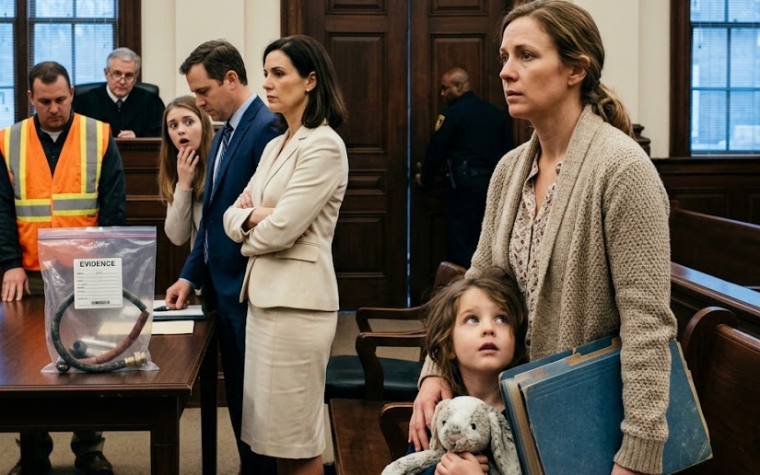
Alexander recognized Carmen’s signature before he understood what the document was.
It curved beneath a paragraph of dense legal language, elegant and controlled, the same signature that appeared on charity checks, board resolutions, and birthday cards written by assistants.
Denise held the page by its edges.
“Mrs.
Harrington,” she repeated, “you told this office you had never heard of these children.”
Carmen’s eyes moved from the document to Alexander.
For the first time since entering the room, she looked uncertain.
“That is not what I said.”
“You said Isabelle Rivers was attempting to attach herself to your son’s name after her death.” Denise’s voice remained professional.
“You said there had been no prior contact.”
Carmen’s lawyer stepped forward.
“My client will not answer questions about an unverified document.”
Alexander took the page from Denise.
It was dated eight years earlier, six weeks after Isabelle had disappeared from Boston.
The letter had been written on stationery belonging to the Harrington family office.
It informed Isabelle that any attempt to contact Alexander regarding her pregnancy would be treated as an effort to extort him.
It warned that the Harringtons possessed the resources to pursue custody after the children were born.
It referred to private medical information Isabelle had never shared with Alexander.
At the bottom was Carmen’s signature.
Attached to the letter was a handwritten statement from Isabelle.
I believed her.
I had no money for lawyers.
I believed that if Alex knew, his family would take my babies and convince him it was best.
I left because I was afraid, not because I wanted them to grow up without him.
Alexander read it twice.
Then he turned to his mother.
“You knew she was pregnant.”
Carmen straightened.
“We are not discussing this in front of children.”
Sophia was watching her.
Eleanor was watching Alexander.
He placed the document face down.
“You came into this room and called them strangers.”
“I called them unverified.”
“No.
You called them strangers.”
The distinction mattered.
Carmen knew it, which was why she looked toward her attorney instead of answering.
Denise closed the folder.
“This visit is over for everyone except Mr.
Harrington,” she said.
“Mrs.
Harrington, you were not authorized to enter this room.
Please leave.”
Carmen did not move.
“You have no idea what you are allowing,” she told Denise.
“My son is grieving and being manipulated by a dead woman’s accusations.”
Sophia slid off the sofa.
“She’s not allowed to talk about Mom like that.”
Her voice was small, but the room went still.
Alexander stepped between Carmen and the girls.
“My mother is leaving.”
“Alex—”
“Now.”
Carmen stared at him as if waiting for the obedient son hidden beneath the forty-two-year-old man.
The son who had accepted her explanations when Isabelle vanished.