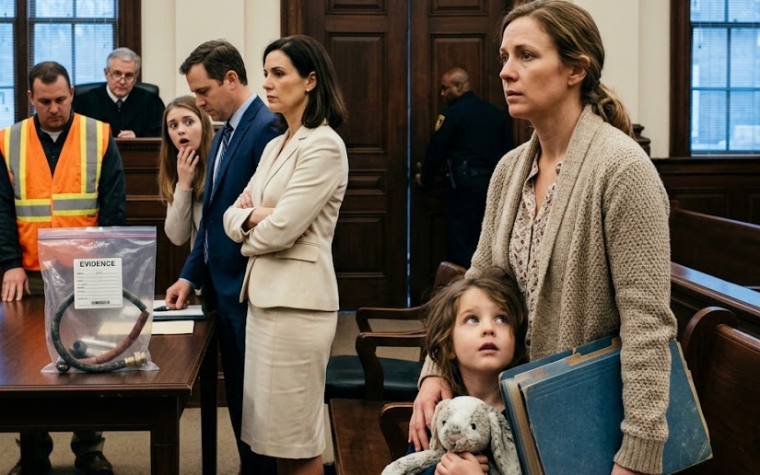
Ethan pressed play a second time.
For several seconds, there was only the muffled sound of movement from the recording—cabinet doors, footsteps, the television somewhere in another room.
Then Melissa’s voice came through the phone.
“Why did you call your grandmother again?”
Ethan’s recorded voice was quieter than it had been in the courtroom.
“I needed my history folder for school.
I left it at her house.”
“You could have waited.”
“I need it tomorrow.”
Melissa sighed sharply.
“This is exactly what I’m talking about.
Every little thing becomes an excuse to run to her.”
“I wasn’t running to her.”
“Once we’re in Phoenix, this stops.
No more calling her every time you don’t like something I say.”
There was a long pause.
Then Ethan asked, “Will I still get to visit Grandma?”
“We’ll see.”
“How often?”
“I said we’ll see.”
“What about Dad’s grave?”
The room around me disappeared.
All I could hear was my grandson’s small voice asking how he was supposed to visit his father after being moved hundreds of miles away.
Melissa answered with visible impatience even though she was only a voice on the phone.
“Ethan, your father is gone.
You cannot build your whole life around a cemetery and your grandmother.”
The recording stopped.
Nobody spoke.
I looked down because I knew if I looked at Ethan, I would cry.
David had been dead eight months, but grief did not move according to anybody’s schedule.
Some mornings Ethan could talk about his father and smile.
Other mornings he would sit at my kitchen table staring at the cereal box because David had once bought that brand.
Melissa knew that.
She also knew Ethan and I visited David’s grave together every Sunday.
Judge Carlton folded his hands.
“Ethan,” he said, “did your mother know you were making either recording?”
“No, sir.”
“Why did you make them?”
Ethan glanced at Melissa.
“Because she tells people things differently afterward.”
Melissa’s attorney stood.
“Your Honor, I must object to characterizing private family disagreements through recordings made by a child.
Ms.
Reynolds is a grieving widow trying to establish stability for her son.”
Judge Carlton nodded once.
“I understand your objection.”
He looked at Ethan again.
“When you say she tells people things differently, what do you mean?”
Ethan’s fingers tightened around the edge of the table.
“She says I always want to stay with her.
But sometimes she tells me to call Grandma because she has plans.
Then when court started, she got mad when I called Grandma.”
My attorney immediately reached for the binder in front of her.
That binder contained eight months of calendars.
Not opinions.
Dates.