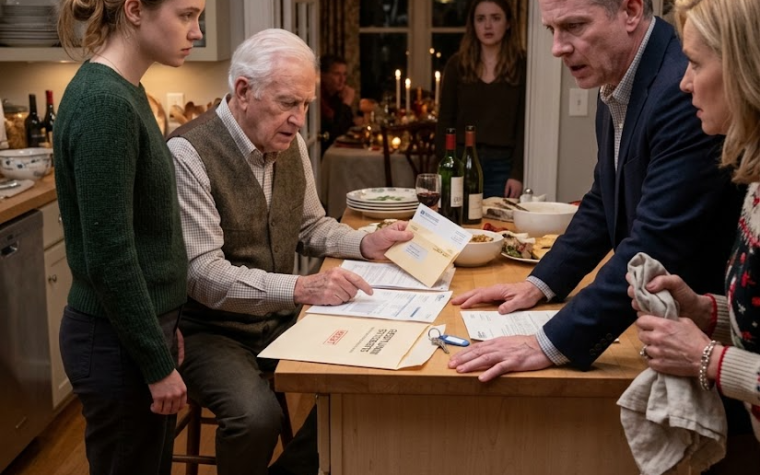
The irony was so sharp that for a second I almost laughed.
Instead, I reached into the folder and pulled out one more page attached behind the reconciliation.
It was the confirmation that the family account had been closed and the January transfer canceled.
Mom read it.
Her mouth tightened.
“You actually canceled it?”
“Yes.”
“Without talking to us?”
I thought about Christmas morning.
The shopping list.
The expensive air fryer.
The message before my plane had even left Pittsburgh.
I thought about every month I had checked my own balance before transferring money to theirs.
“I spent fifteen years talking with my bank account,” I said.
“You just never had to listen.”
Dad rubbed one hand across his face.
“Patty, did you know she only had six hundred dollars left?”
Mom didn’t answer.
“Did you?” he asked again.
“She has a good job.”
“That wasn’t my question.”
Her voice sharpened.
“What do you want me to say? She never told us she was struggling.”
That one landed differently.
Because it was partly true.
I had hidden a lot.
I had hidden the year my rent increased and I stopped replacing worn clothes.
I had hidden how frightened I was after losing my job, when I drained savings to keep sending the same $4,000 every month because Mom had said the mortgage depended on it.
I had hidden credit card balances.
I had hidden canceled trips.
I had hidden the embarrassing moment when a friend suggested a weekend away and I lied that I was too busy because I couldn’t afford the hotel.
I had hidden all of it because every time I considered reducing the transfer, another emergency appeared.
But that did not make my parents innocent.
“I didn’t tell you,” I said, “because I thought good daughters didn’t make their parents feel guilty for needing help.”
Mom seized on the sentence.
“Exactly.”
I held up my hand.
“I’m not finished.”
The room went still.
“I thought helping you made me a good daughter.
Then I heard you tell Aunt Sandra I owed you because you fed and clothed me when I was a child.”
Mom looked embarrassed now, but not apologetic.
“Parents make sacrifices.”
“I know.”
“You have no idea what raising a child costs.”
“Maybe I don’t.” I pushed the $720,000 summary toward her.
“But I know children aren’t supposed to receive an invoice at twenty-three.”
Dad closed his eyes.
Sandra looked down at the table.
Mom’s cheeks reddened.
“That is not what I meant.”
“Then tell me what you meant.”
She opened her mouth.
Nothing came out.
For years, I had been terrified of this exact silence.
I thought if I ever stopped paying, I would have to justify myself perfectly.