‘But he gets every tomorrow you protect.’
Sarah called from a number I did not recognize that night.
Michael answered on speaker because the officer had told him to document any contact.
Her voice was smaller than before, but not softer.
‘You are really choosing your mother over your wife?’
Michael looked at his sleeping son in the bassinet beside my couch.
‘No,’ he said.
‘I am choosing my child.’
She hung up.
That sentence became the line he built the next months around.
There were hearings.
Interviews.
Medical follow-ups.
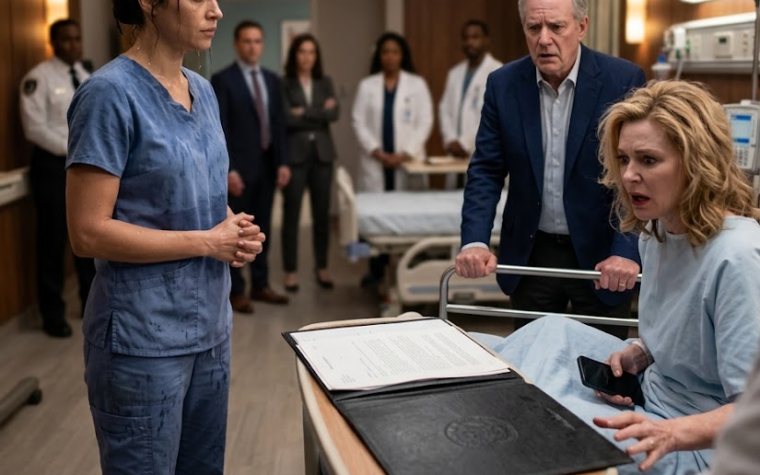
A temporary protective order became stricter after investigators reviewed the footage and the hospital records.
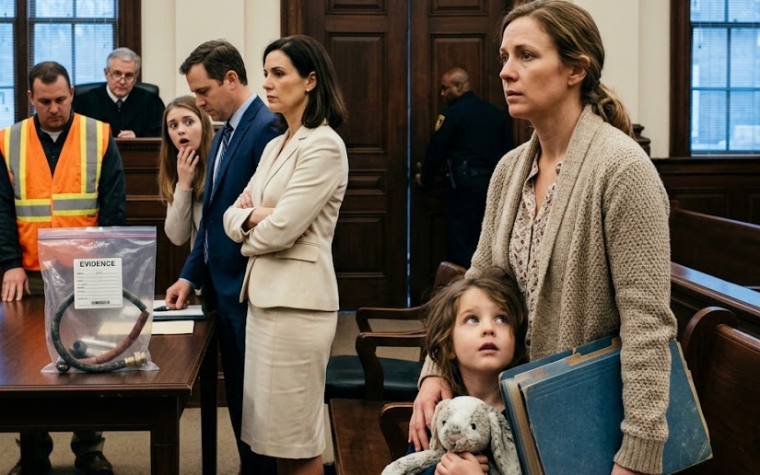
Sarah was charged with child abuse and child endangerment.
Later, through her attorney, she admitted enough that no one in the family could pretend misunderstanding anymore.
She was ordered to have no unsupervised contact, to complete treatment and evaluations, and to stay away from my home.
None of it felt like victory.
People think justice arrives with a clean sound, like a door locking or a judge’s gavel.
It does not.
Sometimes it arrives in paperwork, in supervised visits that never happen because the parent does not show, in a father learning how to warm bottles at 2 a.m.
with tears on his face, in a grandmother sleeping lightly because every small cry still sends lightning through her body.
My grandson healed.
Slowly, but he healed.
His color came back first.
Then his appetite.
Then the little noises he made after a bottle, satisfied and sleepy, like the world had stopped hurting for a while.
At his follow-up appointment, the doctor showed Michael the scans and said the injuries were healing as expected.
Michael cried in the parking lot after that appointment.
Not loud.
Just one hand over his eyes, his shoulders shaking while the baby slept in the back seat.
‘I almost lost him,’ he said.
I did not correct him.
Weeks later, I found the gray crib blanket folded at the end of my guest bed.
For a long time, I could not look at it without seeing the bruise, the hospital lights, Sarah’s face when the report arrived.
Then one afternoon, my grandson spit up on it and smiled at me with milk on his chin.
A tiny, crooked, impossible smile.
The blanket became just a blanket again.
Not all at once.
But enough.
Michael moved into a small apartment near me.
He learned the difference between hungry and tired, between gassy and scared, between crying that asks for comfort and crying that tells the truth.
He never again rolled his eyes when I said something felt wrong.
He kept copies of every report in a folder by his bed, not because he wanted to live inside the worst day, but because he refused to let anyone rewrite it.
One evening, months later, he handed me that folder.
On top was the first photo I had taken, the blurry one from my shaking thumb.
‘I used to hate that you took this,’ he said.
I waited.
He touched the edge of the picture.
‘Now I think it saved him.’
I looked at my grandson asleep against his chest, one small fist tucked beneath his chin.
‘No,’ I said.
‘He saved himself.
He cried until someone listened.’
Michael looked down at his son and kissed the top of his head, the same way he had before leaving that afternoon.
But this time, the gesture was not careless.