Then a misunderstanding.
The words kept getting softer as the evidence became harder.
I declined every request for a private conversation.
The airline’s review moved separately from the airport investigation.
Edward’s travel privileges were suspended pending the outcome.
The crew was interviewed.
The flight attendant was removed from passenger service during the review, not as instant punishment, but because her response had violated the airline’s safety procedures.
Three days later, I joined an emergency oversight meeting by video.
Nobody in that room needed to ask why.
The regional director presented the timeline without excuses.
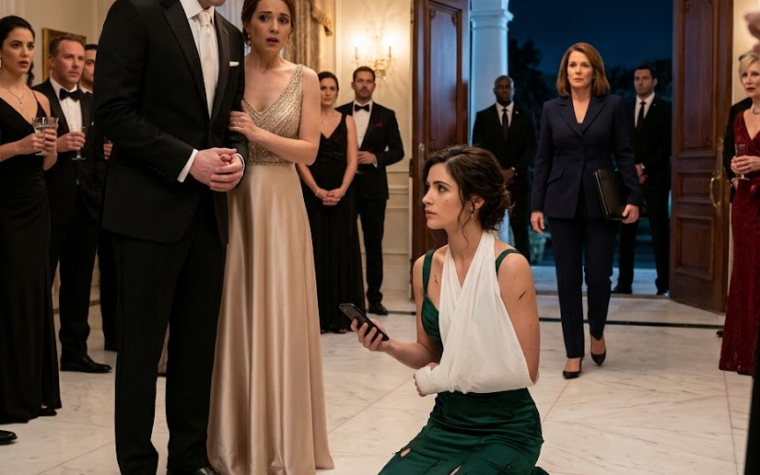
Passenger seated.
Seat dispute initiated.
Physical contact.
Passenger falls.
Crew fails to secure the scene.
Aggressor gives repeated removal instructions despite having no authority.
Crew member begins complying.
Management intervenes.
Medical response delayed by several minutes.
When he finished, the room was silent.
One executive began discussing reputational risk.
I interrupted him.
“Stop.”
He did.
“This isn’t about what happens if the public sees the video.”
I leaned toward the camera.
“It’s about what would have happened if I had been someone whose name none of you recognized.”
Nobody answered.
“That’s the test.
Not how quickly you protected me after you knew who I was.
The test is whether you would have protected me before you knew.”
That became the question the airline could not avoid.
The review expanded.
Training procedures changed.
Cabin crews received clearer authority to halt boarding immediately after physical aggression.
Employees were reminded that loyalty status, wealth, business relationships, and ticket price never outranked passenger safety.
Supervisors were required to document any incident where commercial pressure influenced a safety decision.
The flight attendant asked to speak with me privately after completing retraining.
I agreed.
She sat across from me in a small conference room, hands clasped tightly.
“I keep replaying it,” she said.
“So do I.”
Her eyes filled.
“I knew he was wrong.
I knew it.
But he kept saying he knew executives.
He was loud.
Everyone was staring.
I thought if I got you out of the aisle first, I could fix it afterward.”
“And if I’d been hurt worse?”
She looked down.
“There wouldn’t have been an afterward to fix.”
I let the silence sit between us.
Then she said, “I’m sorry.”
I believed her.
Believing her did not erase what happened.