His mother’s face flushed.
“This is absurd.
It was a gift.”
Richard stepped forward.
“Don’t touch her.”
The second officer looked at him.
“No one is touching her.
We are asking her to surrender property identified in the seizure order.”
The room had become so quiet that the tiny clasp of the watch sounded loud when his mother finally opened it.
Her fingers trembled.
She placed the Rolex into the officer’s gloved hand.
A woman beside her stared at the empty pale band of skin around her wrist.
Another guest looked away.
The humiliation Richard had once expected me to swallow alone had found him in the room where appearances mattered most.
He called me that evening.
I answered because my lawyer had told me not to block anything that might need to be preserved.
“You called federal officers on my mother.”
“I reported an unauthorized transfer from Toby’s account.”
“You knew what would happen.”
“No, Richard.
You knew what you were spending.”
“It was twenty-eight thousand dollars.”
I almost laughed at the way he said it, as if the amount were suddenly small because consequences had reached him.
“It was our son’s surgery money.”
“My mother didn’t steal anything.”
“I never said she did.”
He was silent.
That answer frightened him more than an accusation would have.
His mother had received the watch.
Richard had moved the money.
The documents made that distinction painfully clear.
Within days, he stopped calling me directly.
The divorce moved faster after that.
Once the creditor-approved refinancing was completed, the balances covered by our agreement were transferred into Richard’s name.
I watched account after account disappear from the list of obligations attached to me.
For years, I had thought financial freedom would feel dramatic.
It felt strangely quiet.
One less balance.
One less payment.
One less place where Richard could turn his choices into my emergency.
The bank later made the disputed credit permanent after its investigation.
The recovery process surrounding the seized watch became part of the financial case against Richard, while Toby’s medical fund was restored enough for me to stop measuring every hospital shift against the number that had vanished overnight.
Toby’s surgery went forward.
The morning of it, I sat beside his bed and held his hand while he slept under a thin hospital blanket.
I had spent years caring for critically ill patients, but none of that training made it easy to watch my own child being prepared for a procedure.
I leaned close and kissed his forehead.
“You just breathe,” I whispered.
“I’ll handle the rest.”
For once, I believed myself.
Richard attempted to use Toby’s surgery to soften the divorce negotiations.
He sent messages saying we needed to “remember we were still a family.”
My lawyer answered through formal channels.
Being Toby’s father did not erase what he had done with Toby’s money.
At the final financial hearing, Richard looked different from the man who had stood over me in our kitchen.
His suit was immaculate, but his confidence kept slipping whenever another document was mentioned.
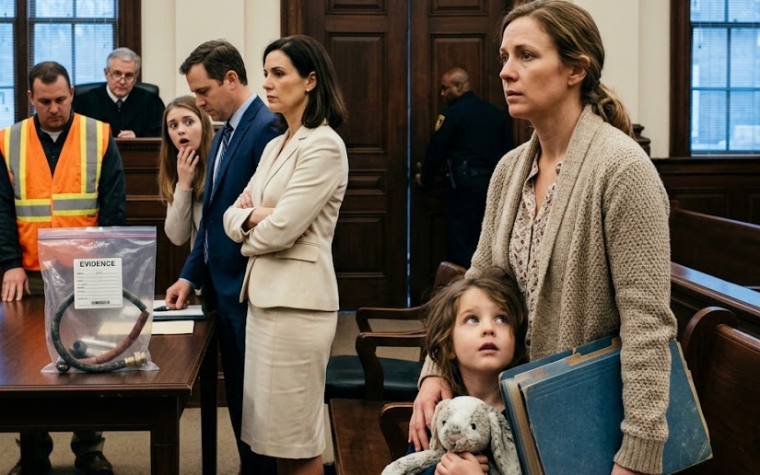
The court reviewed the settlement, the debt transfers, the allocation of responsibility, and the safeguards around Toby’s medical funds.