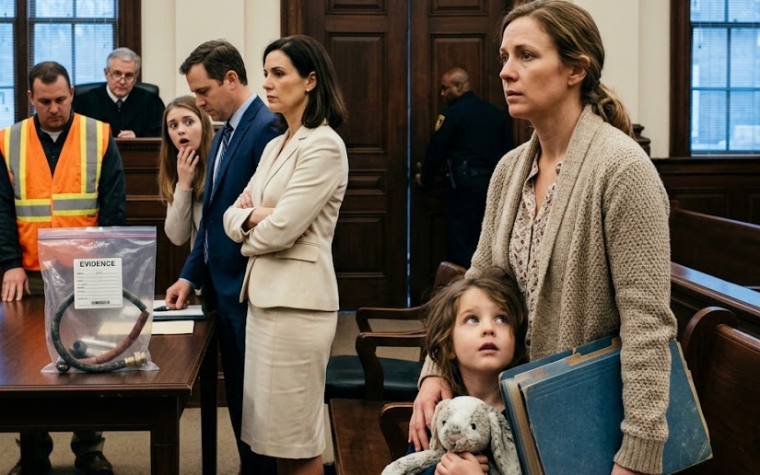
“Mom.”
Her eyes filled again.
Dad answered for her.
“Gregory started saying the downstairs bedroom should be theirs because it’s larger.
Then they moved our things upstairs.”
Fiona sighed loudly.
“Because you weren’t using half the space.”
Dad continued.
“They invited people over.
They started moving furniture.
Gregory told me I couldn’t park in the garage because he needed it.
Yesterday he said they’d decided to stay permanently.”
“That’s not what happened,” Fiona said.
Mom looked at her daughter.
“Yes, it is.”
Fiona went still.
Mom rarely contradicted her children directly.
She did now.
“You told us Lucas would understand,” Mom continued.
“You said the house should eventually belong to you because you have children.”
“Eventually,” Fiona said quickly.
“Exactly.
I was talking about the future.”
Dad pointed toward the cardboard box Gregory had kicked.
“Then why are my clothes in there?”
Nobody answered.
I opened the folder fully.
Inside were copies of the purchase documents and the recorded deed.
I turned the first page toward Gregory, keeping my finger over the important portion.
“When exactly did you decide this became yours?”
He scoffed.
“Your parents live here.
Fiona is their daughter.
We’re family.
You can’t just hold property over everybody’s heads because you have money.”
There it was.
The argument beneath the argument.
Gregory believed I had given my parents the house outright and that family entitlement could be turned into ownership through enough pressure.
Fiona apparently believed the same thing.
I looked at her.
“Did you tell him you owned part of this house?”
She hesitated.
That was enough.
Gregory turned toward her.
“You said it was your parents’ place.”
“It is their place.”
“You said it would come to you.”
Fiona’s face flushed.
“Eventually.”
I slid the deed out of the folder.
“No,” I said.
“It won’t.”
The room became very quiet.
I laid the document on the table.
Gregory leaned forward.
I didn’t need him to read every line.