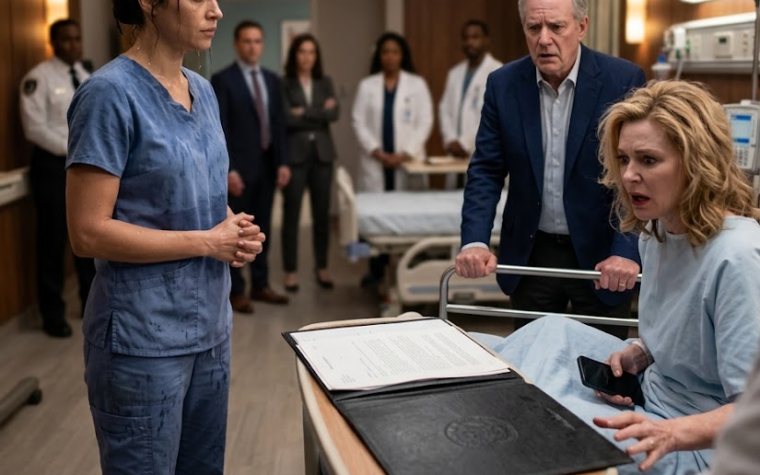
The signature image came from the hospice form Preston had scanned.
Hotel correspondence showed that Patricia had requested Celeste’s sash before Louise ever received the forged email.
Celeste turned over messages in which Preston promised that she would become the public face of the foundation after the memorial.
He told her I had agreed to step aside permanently.
He also told her our marriage was already over.
It had not been over then.
It was over now.
The board removed Preston and Patricia from every volunteer and advisory role.
Their access to donor information was terminated.
The lawyers sent formal notice that neither could represent the foundation or use my mother’s name in fundraising.
Because foundation systems and donor-facing materials had been involved, the unauthorized access was referred for investigation.
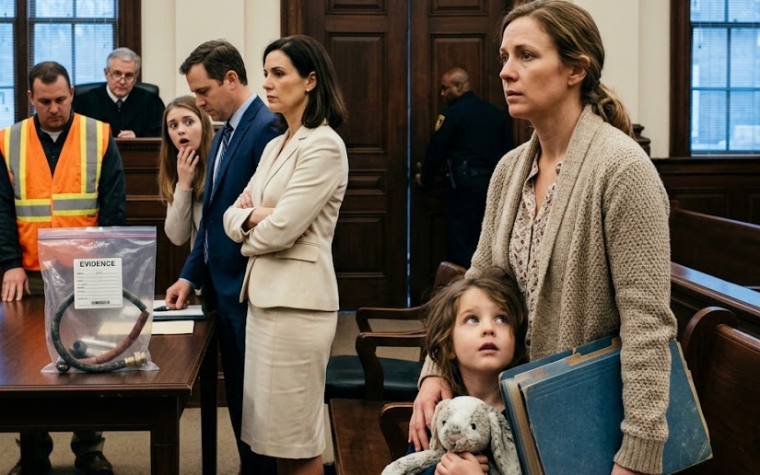
The eventual legal process was quieter than the ballroom confrontation, but it was real.
Devices were examined.
Statements were taken.
Preston’s attorney negotiated over the civil claims while my divorce attorney handled the end of our marriage.
Preston kept insisting that he had only tried to help.
He said I had abandoned him emotionally while caring for my mother.
He said Celeste had brought warmth into a difficult season.
He said the forged approval was merely a shortcut to an outcome everyone wanted.
But everyone had not wanted it.
He had wanted it.
Patricia had wanted it.
Celeste had accepted it.
And they had expected me to carry the shame quietly enough that their version would become the official one.
I stopped carrying it.
Three months later, the fundraiser was held again in a smaller room at the Bellweather Hotel.
We removed the expensive white arrangements and replaced them with jars of yellow daisies from a local market.
My mother had loved daisies because, as she once said, they looked cheerful without trying to impress anyone.
There was no Guest of Honor sash.
The evening focused on the nurses receiving grants from the Whitaker Care Fund.
The nurse who had defended me at the memorial introduced the first recipient.
Louise ran the program with her usual clipboard and a new rule: every major approval required two human conversations, not just an email.
Before I went onstage, she handed me the blue folder.
“You should keep this,” she said.
I ran my fingers over my mother’s handwriting.
For months, I had believed the envelope contained the weapon that saved me.
It did not.
The documents mattered.
The access records mattered.
The video mattered.
But the real force had been my mother’s certainty that, when the moment came, I would finally believe my own eyes.
I walked beneath her portrait and faced the room.
Preston was not there.
Patricia was not there.
Celeste was not there.
Their absence did not feel like victory.
It felt like space.
I used that space to speak about my mother’s work, the nurses she trusted, and the patients the fund would help.
I did not mention the affair.
I did not mention the forgery.
I did not need to turn my pain into the evening’s centerpiece.
When the applause came, it was not for a stolen title.
It was for the work continuing.
Afterward, I stood alone for a moment beside my mother’s portrait.
One yellow daisy had slipped from its jar and fallen across the table.
I picked it up and smiled.