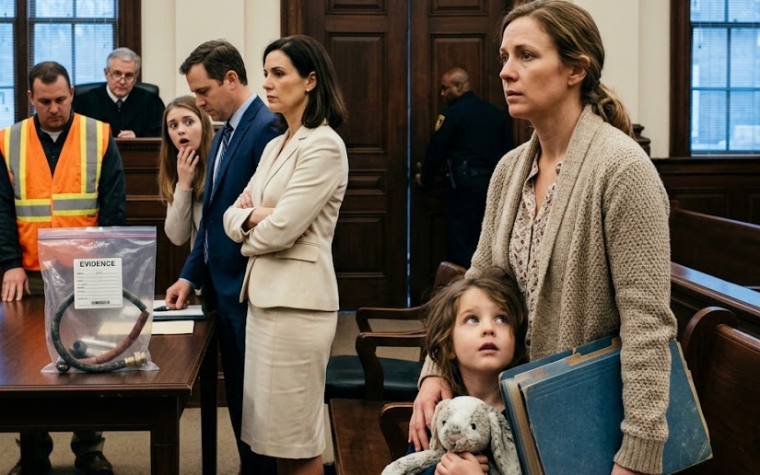
The ventilator log supported the alarm.
My father’s own words confirmed that my mother had described touching the tube.
Whether she had intended to interfere with Rosalie’s breathing or had recklessly decided she knew enough to touch equipment she had no business touching, I could not prove.
And eventually I realized I did not need to invent an intention worse than the act itself.
She had entered a restricted NICU after being denied access and put her hands on lifesaving equipment connected to my premature daughter.
That was enough.
Hospital security made an incident report and advised us about further options.
Kevin and I asked for copies of every record we were entitled to receive and made sure Rosalie’s visitor restrictions were explicit.
My mother did not come back.
But she tried to reach me.
Blocked calls became voicemails from unfamiliar numbers.
Messages came through relatives.
Her version changed depending on the audience.
First she had merely looked at Rosalie.
Then she had touched the tube accidentally.
Then she had noticed the tube was twisted and heroically fixed it.
Then the hospital staff were incompetent and she had prevented a problem.
Finally, when none of those explanations worked, she returned to her oldest argument.
I was ungrateful.
I did not answer.
Two days later, Rosalie’s respiratory numbers improved enough for the doctors to begin reducing her support.
I barely breathed while they explained the plan.
Every adjustment was made by trained hands.
Every number was watched.
Every alarm meant something and had a response.
Brooklyn stood beside me holding the little stuffed rabbit Kevin had bought from the hospital gift shop.
“Are they taking the machine away?” she asked.
“Not all at once,” I said.
“Rosalie has to show them she can do more breathing herself.”
Brooklyn nodded with the seriousness only a six-year-old can have when she has suddenly learned too much about the world.
“She’s brave.”
“So are you.”
She looked at me.
“I was scared when Grandma came.”
“I know.”
“I thought grown-ups were allowed to do things.”
That sentence stayed with me.
Children believe authority and goodness are the same thing until adults teach them otherwise.
I took her hand.
“Being grown-up doesn’t mean you’re always right.
If someone does something that scares you or could hurt somebody, you tell me.
Even if you love them.”
“Even Grandma?”
“Especially if you’re worried.”
Brooklyn leaned against me.
That conversation became the real dividing line in my family.
Not the hospital report.
Not the security footage.
Not even my mother’s messages.
For years I had taught Brooklyn, without realizing it, that keeping peace with Grandma mattered.
That adults should be excused.
That uncomfortable truths could be softened to preserve someone else’s image.
I had done exactly what I learned as a child.
The night my mother entered that NICU, Brooklyn broke the pattern simply by telling the truth.
Rosalie remained hospitalized for several more weeks.
Progress was not dramatic.