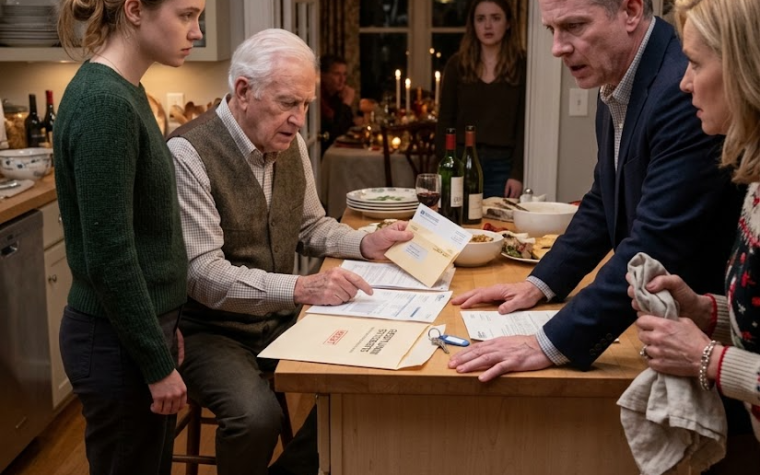
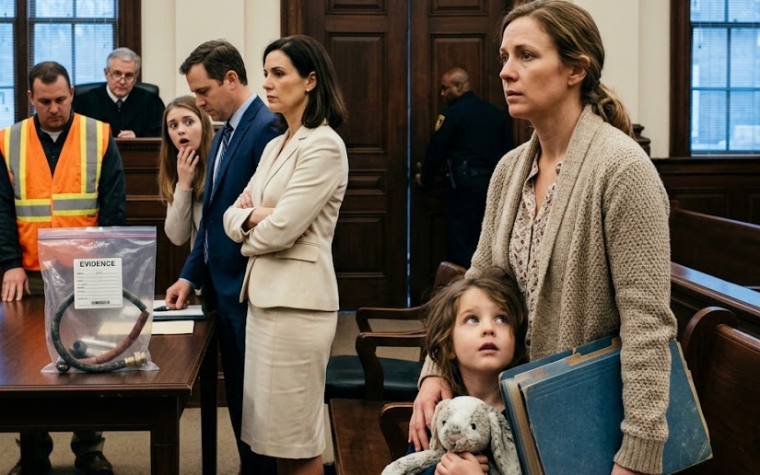
“I was wrong.”
Those three words were more than I had expected and less than I needed.
I told her any future relationship would happen slowly, on our terms, and never around Brent.
She nodded.
Then she left the presents on the porch and walked back to her car.
Nathan never celebrated what happened to Brent.
That surprised some of my relatives more than anything.
They had expected him to gloat because that was how they understood power.
To them, winning meant making someone else kneel.
Nathan saw it differently.
One night, several months after Christmas, I asked whether he had known from the beginning that the security footage could affect the company.
We were sitting on Caleb’s bedroom floor assembling a model airplane after he fell asleep.
Nathan fitted two plastic pieces together before answering.
“I knew evidence changes who gets to control a story.”
“That’s all?”
“That’s enough.”
I smiled faintly.
“So when you said, ‘This isn’t over’…”
“I meant nobody was going to make Caleb grow up believing he deserved what happened.”
I looked toward our sleeping son.
The red mark had disappeared from his cheek within days.
The harder damage took longer.
For weeks he became nervous around spilled drinks.
If he knocked something over, he apologized too quickly.
Once, when a bowl slipped from his hands and shattered in our kitchen, he froze completely.
Nathan immediately crouched beside him.
“Are you hurt?”
Caleb shook his head.
“Then we clean it up.”
“You’re not mad?”
“It’s a bowl.”
Caleb stared at him.
Then his shoulders relaxed.
That moment mattered more to me than Brent losing his office.
More than my father’s damaged succession plan.
More than every angry family message I had saved.
Because that was the real reversal.
Christmas had shown Caleb one version of adulthood: power used to frighten someone smaller, then defended by people too comfortable to object.
Nathan showed him another.
Power could be a man who was furious and still kept his hands at his sides.
Power could be evidence instead of intimidation.
Power could be walking away from a mansion rather than begging to remain welcome inside it.
The next Christmas, there were only three of us at dinner.
No chandelier.
No crystal glasses.
No twenty-seven relatives measuring our worth.
Caleb insisted on pouring the water himself.
Halfway through dinner, he reached across the table to show Nathan another drawing.
His elbow caught his glass.
Water spilled everywhere.
For one second, Caleb froze.
Then Nathan looked at the puddle, looked at him, and grinned.
“Good thing we own towels.”
Caleb laughed.
I laughed too.
And as I wiped water from our ordinary wooden table, I realized something I should have understood years earlier.