“Dad wanted the company kept under experienced leadership,” he said.
“Claire walked away from finance.
She abandoned her career.
Owen and I stayed.
We built the business with him.”
I finally faced him fully.
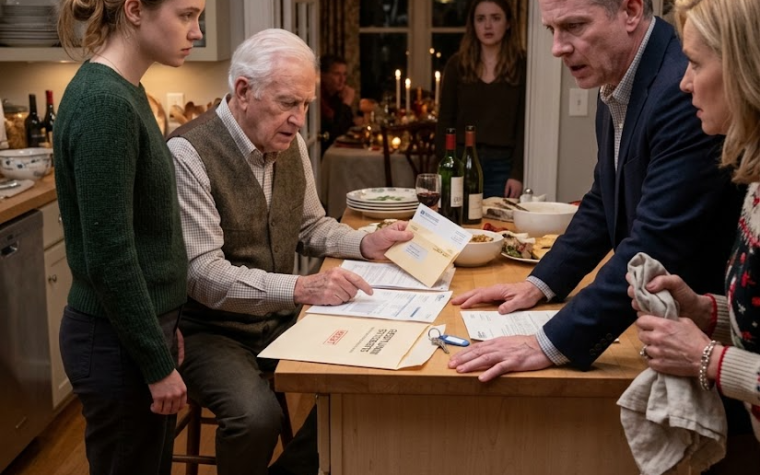
“I took unpaid leave because Dad could no longer be alone.
You visited when you needed his signature.”
“You lived off him.”
“I paid his household expenses when you froze his personal card.”
Grant’s eyes narrowed.
That was another fact he had not expected me to know.
During my review, I had found that his authority over one company account did not extend to Dad’s personal trust.
To create pressure, Grant had flagged Dad’s credit card as compromised and redirected the replacement to his own office.
Bills began failing.
Groceries, therapy equipment, and a home health invoice went unpaid.
I covered them from my savings until nothing remained.
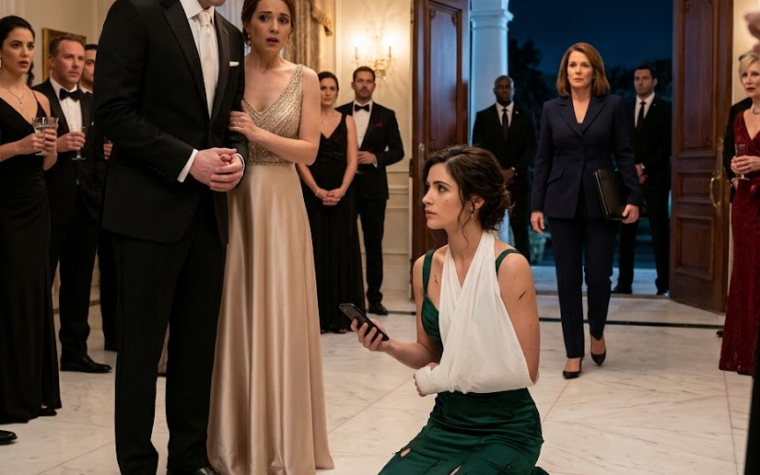
That was why I had borrowed Mrs.
Alvarez’s dress.
The humiliation my brothers enjoyed had been partly manufactured by them.
Miriam removed a thinner folder from beneath the audit.
“This is your father’s valid estate plan,” she said.
Grant stared at it.
“The new will replaced that.”
“The new document is under investigation for fraud, coercion, and forgery.
Until a probate judge rules, it controls nothing.
All estate assets are frozen.
You have no authority to sell property, transfer shares, enter the residence, or operate company accounts beyond ordinary approved expenses.”
Owen looked alarmed.
“I’ve already moved into Dad’s office.”
“Then you will move out.”
“I ordered a car through the company.”
“It has been canceled.”
Grant’s voice hardened.
“You can’t freeze a company because of one hysterical recording.”
“The board can,” Miriam replied.
“Your father anticipated a possible incapacity dispute last year.
He placed his controlling shares in a trust and appointed an independent fiduciary to act if his capacity or estate documents were challenged.
The fiduciary suspended both of you this morning after reviewing the evidence.”
For the first time, Grant had no immediate response.
He had spent the week walking through Dad’s office as though ownership were a matter of posture.
He changed the nameplate, summoned managers, requested financial access, and told employees to address him as acting chairman.
None of it had given him legal control.
“Who is the fiduciary?” he asked.
Miriam closed the thin folder.
“That will be addressed through the board and probate court.
Not by you.”
It was not the spectacular inheritance announcement Grant had probably feared.
Dad had not secretly handed me a kingdom three hours before his death.
Reality was slower and more disciplined than that.
The valid plan divided the estate equally among his three children after taxes, debts, and charitable gifts.
The controlling company shares remained in trust, with professional management and strict restrictions against self-dealing.
No child could seize the business alone.
Dad had not chosen me over my brothers.
He had tried to protect all of us from becoming our worst selves.
Grant and Owen had defeated that protection only in their imaginations.