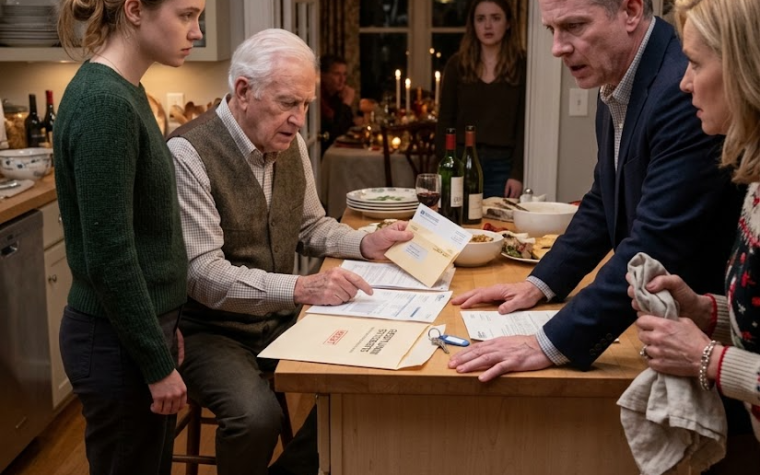
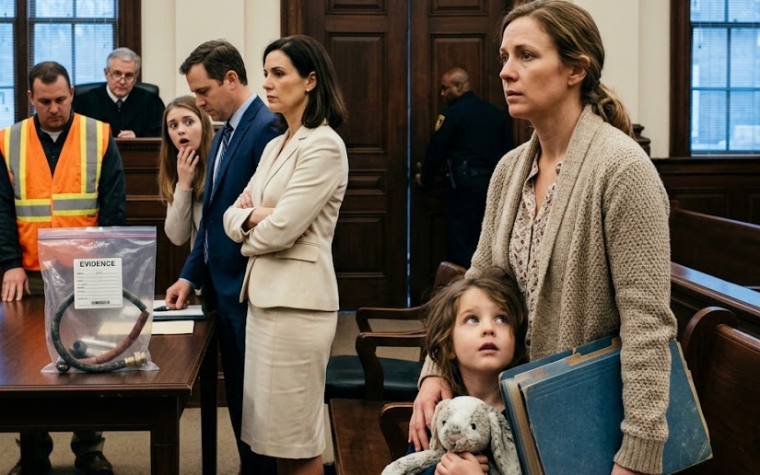
A man losing control because his own words were being played back to him.
The remaining recordings showed a pattern.
Nick discussing the timing of the divorce while I recovered.
Nick talking about the house as though it were already his.
Nick telling Chloe that I might not be strong enough to care for her.
Nick saying that expensive lawyers win because the other person eventually runs out of money.
None of the clips contained one magical sentence that decided everything.
Together, they were worse.
They showed intent.
They showed planning.
They showed that the version of events his attorney had presented that morning was incomplete at best.
And they showed that Chloe had not imagined the pressure she felt.
When the last recording stopped, Nick’s lawyer requested another private conference.
The judge allowed it.
Nick leaned toward his attorney, speaking through clenched teeth.
His attorney answered once, then pointed toward the tablet.
Nick’s face changed.
He finally understood what I had understood the moment his image appeared onscreen.
He could no longer control the story simply because he had more money.
Evidence had entered the room.
The judge did not announce some dramatic instant punishment.
Real decisions involving a child required more than anger.
Instead, he ordered that the recordings be preserved and reviewed through the proper process.
He kept Chloe in my care while the custody matter continued and made it clear that attempts to pressure her would be taken seriously.
He also directed that future discussions involving Chloe follow stricter boundaries while the case was pending.
For the first time since Nick filed for divorce, I felt the ground stop moving beneath my feet.
The case continued.
I still had to recover physically.
I still had financial problems.
I still had to answer filings and defend myself against a man who had entered the process with far more resources than I had.
But the courtroom recordings changed everything about how Nick’s claims were viewed.
His argument that he had acted only out of concern for Chloe became much harder to maintain when his own recorded words showed him discussing custody as part of a strategy to leave me with as little as possible.
His effort to use my surgical recovery against me also backfired.
The reason I was recovering was now impossible to separate from the rest of the story.
I had undergone major surgery because I had donated a kidney to him.
He had known I would be vulnerable afterward.
And according to his own words, he had viewed that vulnerability as useful.
Nick tried different explanations.
First he said he had been angry when the recordings were made.
Then he said his words had been taken out of context.
Then he argued that private conversations shouldn’t define him as a father.
But every explanation created another question.
Why had he discussed filing while I was still preparing to donate?
Why had he told Chloe I might not be able to care for her?
Why had he described my weakness as an advantage?
And why had his version of events in court sounded so different from the one captured when he thought nobody important was listening?
Chloe was interviewed carefully away from the pressure of both parents.
She told the same story she had told in court.
She loved her father.
She was angry with him.
She wanted to live with me.
She had recorded him because she was afraid nobody would believe what he said when I wasn’t there.
That last part stayed with me.
A child should never feel responsible for collecting proof against a parent.
I told her that later.
“You don’t ever have to protect me like that again,” I said.