The trust remained mine.
I did not buy a mansion.
I did not arrive at Colette’s house in a sports car.
Most of the money stayed where Mom had kept it: invested, quiet, almost boring.
I used part of the income to repair the Warwick house.
The roof had leaked above the back bedroom for years because Mom insisted every estimate was highway robbery.
I replaced the furnace she had cursed every January.
I kept her pink slippers in the hall closet even though I knew I would never wear them.
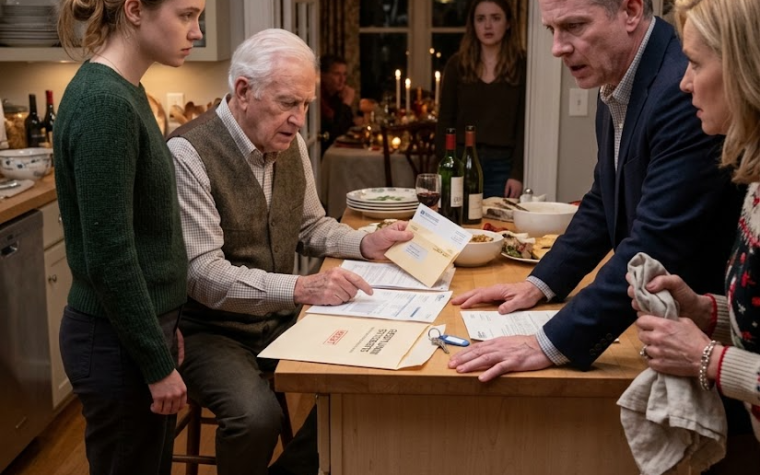
Harold eventually gave me one final envelope from Mom’s estate file.
It was not a secret new will or another fortune.
Just a note she had left with her trust papers after one of her reviews.
Her handwriting leaned harder to the right near the bottom, the way it always did when her hand became tired.
She wrote that the trust was not meant to measure love between daughters.
She had arranged the rest of her estate to care for both of us.
The medical settlement, she said, came from the worst physical ordeal of her younger life, and she wanted it to pass to the daughter she believed would understand what security meant without turning it into a competition.
I read that line three times.
Then I put the note down and cried harder than I had in court.
Not because I had won.
Because Mom had known us better than either of us wanted to admit.
Months later, Colette called.
We did not repair twenty years of sisterhood in one conversation.
She did not apologize perfectly.
I did not forgive perfectly.
But she said something I had stopped expecting.
“I should have come more often.”
“Yes,” I said.
“I should have been there.”
“Yes.”
“And I should never have let Preston turn my resentment into a diagnosis.”
That time I was silent.
Then I said, “No.
You shouldn’t have.”
We talked for eleven minutes.
It was not reconciliation.
It was a beginning with boundaries.
Preston never apologized to me.
I eventually understood that I did not need him to.
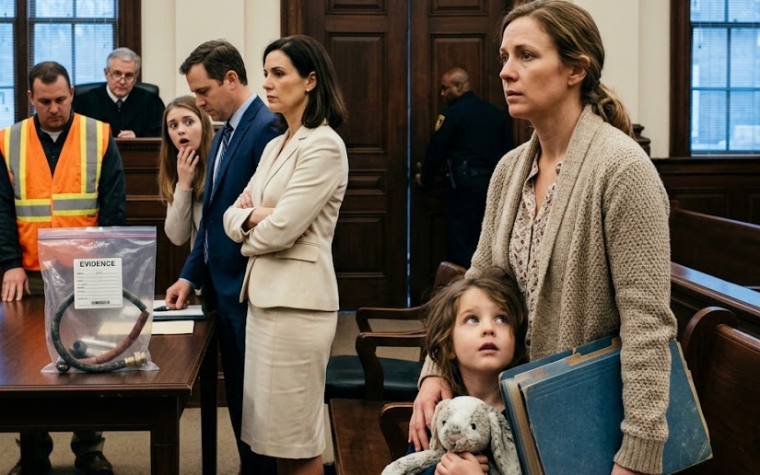
The moment that mattered had already happened in the courtroom, when he sat beneath oath with all the authority of his profession wrapped around his words and Judge Fitzwilliam asked one ordinary question.
When exactly did you examine her?
That question gave me something the money never could.
It forced everyone in the room to separate what had been said about me from what could actually be proven.
For months, Colette and Preston had built a version of me that was easier to defeat than the real woman: unstable, lonely, overwhelmed, incapable.
I had almost exhausted myself trying to imagine how I could prove a negative.
How do you prove you are not irrational when every angry response becomes evidence that you are?
How do you prove you were caring, not controlling?
How do you prove grief is grief instead of pathology?
In the end, I did not have to prove every accusation false.
They had to prove their accusation true.
And they could not.
I still have the folder Harold placed beside me that morning.
The edges are bent now.
There is a coffee stain near the bottom corner.
Inside are copies of filings I no longer need and notes from a fight I never wanted.
Sometimes I think about throwing it away.
Then I remember Preston’s face when the judge removed his glasses.
I remember Colette whispering, “Oh no.”