She said Jason had always been insecure and that I should understand how difficult it was for him to live in my shadow.
She never asked how Ivy was healing.
She never apologized.
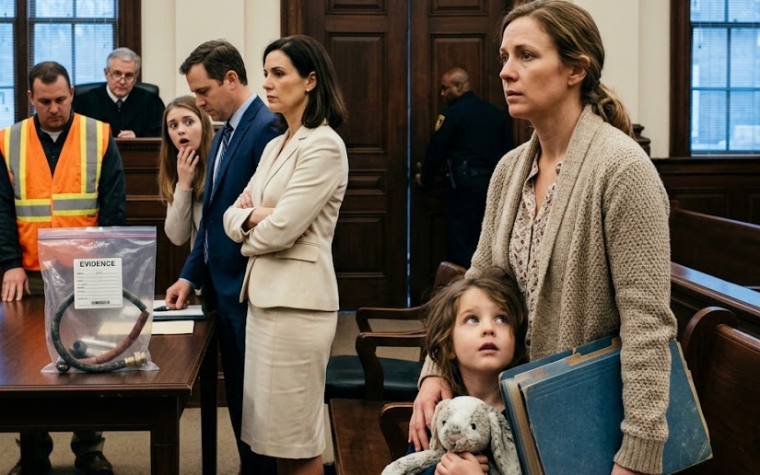
The legal process did not deliver instant justice.
There were interviews, disputed filings, financial audits, and long meetings where Ivy had to repeat what happened.
Jason’s representatives argued that she had signed voluntarily.
Mother insisted she had merely witnessed family disagreements.
But documents have memories.
Bank records showed where the money went.
Email logs showed who arranged the attorney meetings.
Deployment records proved I could not have signed in person.
The dates on Jason’s transfers matched the dates Ivy had photographed paperwork with a shaking hand.
Medical records supported her account of force.
His own messages showed knowledge and intent.
The transfers were eventually voided.
The house returned fully to our control.
The investments that could be traced were restored or frozen for recovery.
Jason lost access to the business, and the shell company was dismantled through the proceedings that followed.
The evidence was referred for criminal investigation, and both he and Mother faced consequences for the fraud, coercion, and violence they had tried to disguise as family management.
They did not leave our lives with the dignity they had denied Ivy.
Jason blamed everyone except himself.
Mother called me ungrateful until the day her attorney advised her to stop contacting us.
I did not answer either of them.
The harder work happened after the accounts were secured.
Ivy still flinched at doors opening behind her.
She kept her phone beneath her pillow and woke when footsteps crossed the hallway.
Some mornings, she apologized for papers she had been forced to sign.
Other mornings, she stared at the kitchen chair where Mother used to sit and could not enter the room.
I learned not to demand that home feel safe simply because the locks had changed.
I asked before touching her.
I sat nearby when she needed space.
I listened when she wanted to tell the story again and stayed quiet when she did not.
The medal remained inside my duffel bag for weeks because displaying it felt wrong while Ivy was fighting a battle no one had honored.
One evening, I found her in the office where they had forced her to sign.
The desk had been moved, but faint scratches remained on the floor.
She held the original partnership agreement for the business we had built together.
“We started this with one borrowed computer,” she said.
“And a folding table.”
“You hated that table.”
“It tried to collapse every time I touched it.”
For the first time since I came home, she laughed without immediately looking toward the door.
I placed the deployment folder beside her.
The papers inside had helped prove where I had been, but they could not erase what happened while I was gone.
Ivy touched the edge of the folder.
“They thought this would make you doubt me,” she said.
“It did for a moment.”
She looked at me.
I did not hide from the truth.
“I will regret that moment for the rest of my life,” I said.
“But I will not spend the rest of my life making you pay for it.”
Her shoulders lowered.
We returned to the business slowly.
Ivy chose which meetings to attend and which responsibilities she wanted back.
We replaced the accounts, reviewed every contract, and removed every trace of Jason’s authority.
Employees who had been misled gave statements.
Clients who had been told I approved the restructuring received the truth.