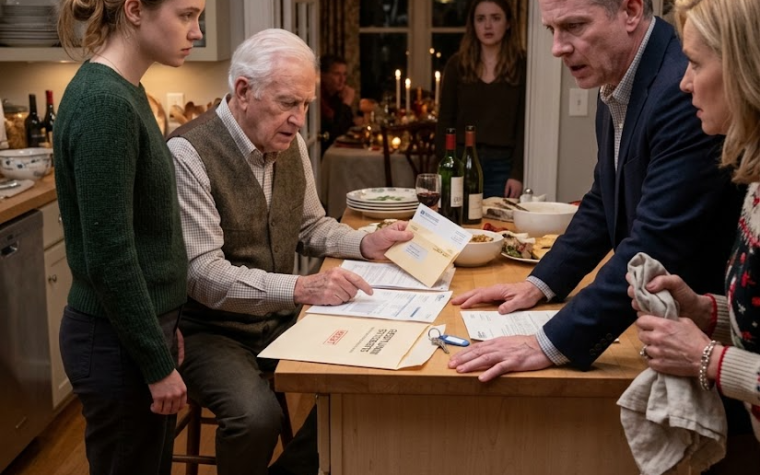
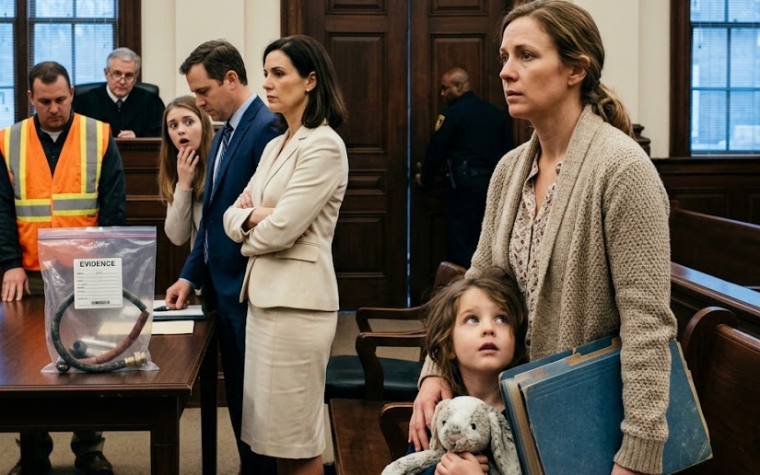
The old records did not produce an instant, dramatic punishment.
Too much time had passed, and some facts were difficult to reconstruct.
But they changed something equally important.
They ended the lie.
Relatives who had once repeated that I was a difficult child began calling with memories they had ignored.
An aunt admitted she had seen bruises and accepted my mother’s explanation because questioning it would have caused conflict.
An uncle remembered my father dragging me from a holiday table and had convinced himself it was ordinary discipline.
Their apologies did not erase anything.
Some were sincere.
Others sounded like attempts to escape their own guilt.
I listened when I had the strength and ended conversations when I did not.
My mother sent messages for weeks.
At first, she demanded that I withdraw everything.
Then she blamed my father.
Then she blamed her own childhood.
Finally, she wrote that she had done the best she could.
I replied once.
“The best you could do would have been standing between him and me.
I had to learn how to do that without you.”
After that, I blocked her.
My father never apologized.
Through relatives, he described himself as the victim of an ungrateful daughter.
He said the family party had been a trap, though he had been the one who stood, removed his belt, and raised it over a frightened child.
He could call it whatever he wanted.
The video remained the same.
The documents remained the same.
My daughter’s memory mattered more to me than his version of events.
For several nights after the party, she asked whether she had been bad for breaking the glass.
Each time, I held her and gave her the same answer.
“You had an accident.
Accidents do not make you bad.
Adults are responsible for controlling their own anger.”
The first time I said it, my voice shook.
The second time, it became easier.
By the fifth time, I realized I was speaking to both of us.
Months later, my daughter wore the yellow dress again.
The hem was shorter, and the white shoes no longer fit, but she insisted on wearing the dress while helping me set our small dinner table.
She carried a plastic cup with both hands.
It slipped.
The cup bounced harmlessly across the floor.
She froze.
For one terrible second, I saw the party in her face.
I crouched beside her.
“It’s okay,” I said.
“Nothing bad happens because a cup falls.”
She studied me, waiting.
Then she smiled, picked it up, and returned to the table.
That ordinary moment felt larger than every confrontation that came before it.
My parents had taught me that family peace depended on the smallest person absorbing the greatest fear.
My daughter would learn something different.
She would learn that love did not arrive with a raised hand, a tightened belt, or a demand for silence.
She would learn that an accident could remain an accident.
She would learn that her mother believed her before she had to prove anything.
I once thought opening the folder destroyed my family.
It did not.
The folder only exposed what had already been broken.