I had gone through anyway.
“When did you know?” I asked.
“Suspicions began after the wreckage was examined.
The serial plate you reported during rehabilitation gave investigators the production batch.”
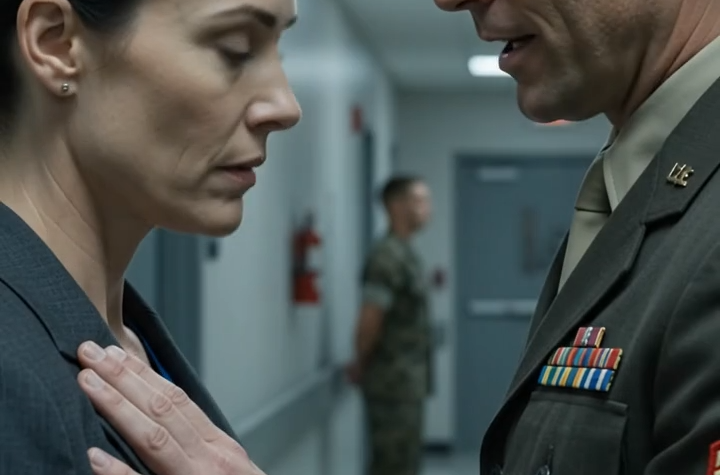
I remembered the interview at the naval hospital.
A safety officer had shown me photographs of the compartment, asking what I recalled before the fire reached me.
Most of the images had been fractured pieces of machinery.
One metal plate had stood out because I recognized the shape of my father’s company emblem beneath the soot.
I had told the officer everything.
Two days later, Richard visited my hospital room for the first time.
He brought white lilies and placed them where I could not reach them.
Then he asked whether investigators had questioned me about equipment failures.
At the time, I believed he was concerned for the sailors.
When I told him about the serial plate, he had gone very still.
“You were under extreme stress,” he said.
“Be careful about confusing memory with fact.
A careless accusation could destroy hundreds of jobs.”
I had thought he was protecting his employees.
Now I understood that he had been protecting himself.
Admiral Cross turned another page.
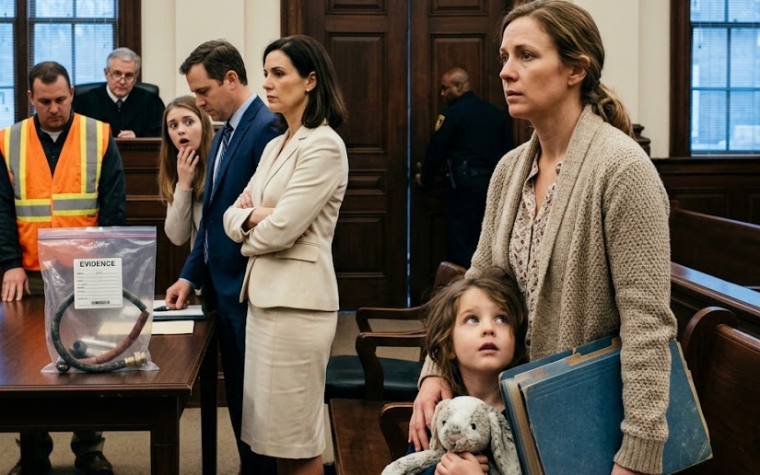
There were laboratory results, production records, and photographs of identical housings removed from other ships.
“The approved design required a heat-resistant ceramic seal,” she said.
“Your father’s company substituted a cheaper polymer compound after certification.
The replacement looked identical from the outside, but it degraded far below the required temperature.”
Daniel’s jaw tightened.
“How many ships?”
“Enough that we began a fleet-wide inspection before dawn.”
The phrase she had used at the altar returned to me.
Solid enough to force an inspection across the fleet.
My father’s shortcuts had not endangered one crew.
They had placed sailors I would never meet inside ships carrying the same hidden weakness.
“Did he know?” I asked.
Admiral Cross met my eyes.
“That is what makes the case solid.”
She removed a set of printed emails from the folder.
The messages had been exchanged between Richard and his quality-control department.
Test samples had failed repeatedly.
An engineer had warned that the substitute seal could soften during a sustained fire.
My father’s reply appeared beneath the warning.
The sentence was brief.
Use the original certification package.
The Navy does not retest every delivery.
A second message ordered the failed samples destroyed.
A third instructed an employee to alter the material code on future production logs.
The room seemed to tilt, though I was standing still.
I had given Richard my savings when Vale Maritime Systems was weeks from collapse.
He had sat at my kitchen table, his hands wrapped around a cup of coffee, telling me the company only needed time.
“This business is the Vale name,” he had said.
“One day it will belong to the whole family.”
I had transferred the money the next morning.
He never repaid it.
Years later, he had saved his company again by cutting the cost of a component designed to protect people like me.
A hard knock struck the door.
Before Daniel could answer, Richard entered.
Camille followed him, closing the door quickly behind her.
My father had recovered enough to wear his public expression—the calm, slightly offended face he used whenever someone challenged his authority.