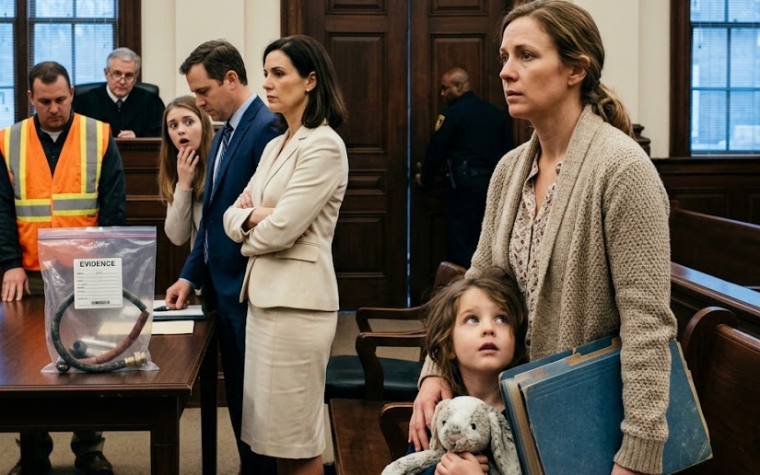
Tyler initially claimed there had never been another recording.
Then the original file was recovered from an automatic backup linked to his account.
The video began before the first cut.
It showed my father entering the room with the scissors.
It showed my mother closing the door behind them.
It showed Tyler laughing while my father sliced through the lace gown and said, “Let’s see her command her way out of this.”
It showed my mother telling him to be careful not to cut the garment bag at the back of the closet because she thought it contained old uniforms worth nothing.
It showed all three of them waiting for the noise to wake me.
My father had not acted in sudden anger.
They had planned the humiliation and recorded it for entertainment.
Once the video existed outside Tyler’s control, the family story changed quickly.
My mother called me first.
“Your father made a mistake,” she said.
“A mistake is spilling coffee.
He made a plan.”
“You know how he gets when he feels disrespected.”
“I did not disrespect him.
I got married.”
She lowered her voice.
“If you continue with this report, there could be consequences.”
“Yes.”
She waited for me to sound afraid.
“For him,” I added.
My father called next.
He did not apologize.
He said I was destroying the family over clothes and threatened to tell everyone I had abandoned my mother.
I ended the call.
Tyler sent one message three days later.
Dad says this is your fault.
I answered, You recorded what happened.
Watch it without laughing.
He never replied.
The case did not become a dramatic courtroom battle.
It became months of interviews, legal notices, and numbers printed on official paper.
My father eventually accepted an agreement requiring him to pay restitution for the dresses and complete court-ordered counseling.
Tyler was required to provide the original recording and give a truthful statement.
My mother faced no property charge because she had not physically cut the dresses, but her presence in the video ended her ability to claim ignorance.
The financial consequence mattered less than the record.
For the first time, what happened inside that house existed somewhere my father could not rewrite it.
Several weeks after the wedding, Michael came with me to retrieve the folded American flag from my grandfather’s funeral and the remaining belongings in my childhood room.
An officer waited outside while we packed.
My father stood in the hallway.
He looked smaller than I remembered, though nothing about him had physically changed.
“You are still my daughter,” he said.
I placed the folded flag carefully into a box.
“Yes,” I replied.
“That never made me your property.”
He had no answer.
My mother watched from the kitchen.
For once, her silence belonged only to her.
Michael carried the box to the car.
I carried my uniform garment bag.
Months later, our wedding photographs arrived.
There were no pictures of me in lace or satin.
No veil caught in the wind.
No carefully arranged image of my father giving me away.