“Yes.”
I swallowed.
“I wish she hadn’t.”
He nodded and wrote something down.
My phone vibrated on the hospital bed beside me.
My lawyer had replied.
I didn’t open the message while the officers were speaking to me, but seeing the notification settled something in me.
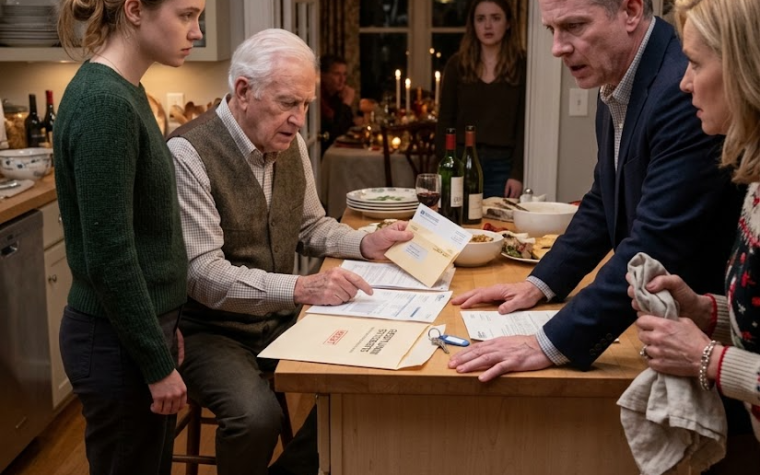
Weeks earlier, when my mother first said, “Bethany will only need your spare rooms temporarily,” I had laughed because I thought she was testing an idea.
Then the family group messages began.
Bethany needed stability.
The children needed space.
I had more house than one person required.
Why was I making this difficult?
At first I responded the way I always did—with explanations.
I used one bedroom as an office.
Another held storage.
I worked from home several days a week.
I valued privacy.
I had spent a decade building a life I could afford without anyone else’s help.
Every explanation became an invitation to negotiate.
My office could move downstairs.
Storage could go into the garage.
Privacy was less important than family.
Eventually I stopped explaining.
“No,” I wrote.
That was when the language changed.
My mother started saying “the family house.”
Bethany repeated it once.
Then my father called and told me I was “forcing children to suffer over empty rooms.”
I contacted a lawyer the next morning.
I had felt ridiculous doing it.
What was I going to say? My parents were being pushy?
But my lawyer didn’t laugh.
The advice was practical.
Save the messages.
Keep communication clear.
Do not give anybody permission to move belongings into the house.
Do not hand over keys.
Do not make vague statements that could later be represented as consent.
And if anyone threatened me, damaged property, entered without permission, or became violent, stop treating it as a family disagreement.
That last sentence had stayed with me.
Stop treating it as a family disagreement.
So we’d made a simple plan.
Phase one was documentation if the pressure crossed a line.
Not baiting anyone.
Not provoking anyone.
Not waiting hopefully for something terrible to happen.
Just refusing to hide it if it did.
The glass had crossed the line for us.
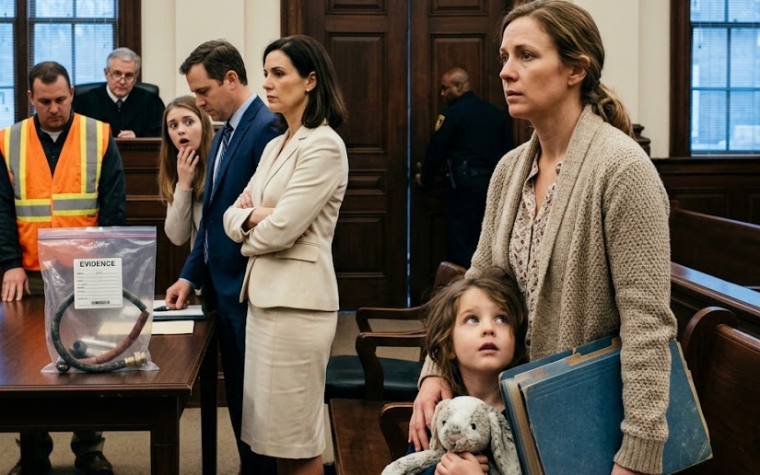
The ER record, photographs, my statement, the witnesses and the police report meant what happened could no longer exist only inside the Donovan family’s private version of reality.
When the officers finished taking my statement, one asked whether I felt safe returning home.
“Yes,” I said.
“They don’t live with me.”
“Do they have keys?”
I hesitated.
Years ago, my parents had kept an emergency key.