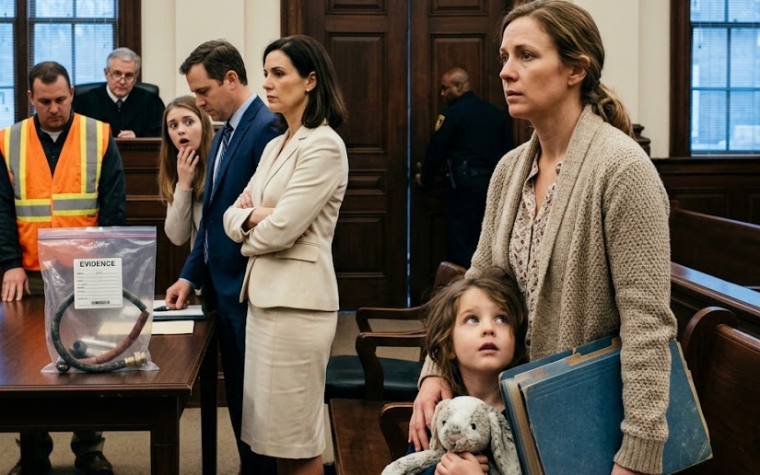
Madison was left facing the consequences tied to accounts she had treated as harmless shortcuts when someone else’s identity was carrying the risk.
The older financial records were referred onward for formal investigation.
My parents were required to answer questions about transactions they had once dismissed as none of my business.
The attempted $2,300 withdrawal became the cleanest piece of evidence because it was current, electronically recorded, and followed by Dad’s own voicemail acknowledging exactly what he had been trying to accomplish.
He had believed the amount made the act small.
Instead, the timing made it devastating.
He had tried to take money from his daughter six days after she underwent a C-section, while she was caring for his newborn grandson alone, so he could improve a luxury cruise cabin.
There was no family explanation that made that look reasonable.
Eventually, the financial consequences became impossible for my parents and Madison to ignore.
Repayment obligations followed the findings tied to the older money.
Fraudulent debts stopped belonging to me.
Their access to anything connected to my finances ended permanently.
The matters supported by the records moved into legal channels, where agreements and penalties replaced the private promises my family had broken for years.
Their lives did not vanish overnight.
But the system they had built around my silence did.
Dad could no longer assume my account was available when his own money was inconvenient to use.
Madison could no longer put my name on something and trust Mom to shame me into accepting it.
Mom could no longer erase an incident by declaring that discussing it was hurting the family.
And none of them could make me apologize for documenting what they had done.
Months later, after my body had healed and my son had begun sleeping for longer stretches, I opened the gray folder again at my dining table.
It was thicker now.
There were final dispute letters mixed with the old statements.
Confirmation that my credit record had been corrected where the fraudulent accounts had appeared.
Records showing that my father no longer had any route into my finances.
Copies of the documents that had turned years of arguments into facts other people could evaluate without knowing any of us personally.
For the first time, I noticed how ordinary the folder looked.
Gray cardboard.
An elastic band.
Nothing dramatic.
Yet my parents had been more frightened of that folder than they had ever been of my anger.
Anger could be called disrespect.
Tears could be called manipulation.
Pain could be called drama.
Evidence was harder to rename.
My phone buzzed on the table.
For a second, old instinct tightened my stomach.
Then I looked at the screen and realized it was Nolan calling from overseas.
I answered, and his face appeared.
I turned the phone toward our son.
The baby blinked sleepily at his father’s voice, and Nolan smiled so widely that I had to look away for a moment.
Not because I was sad.
Because I finally understood what had changed.
When I sent that message from the hospital asking my parents for help, a part of me had still been waiting for them to become the family I kept hoping they were.
Their silence had hurt because hope was still attached to it.
The $2,300 withdrawal severed that hope in the ugliest possible way.
But it also gave me something clearer.
I no longer needed them to admit I had been treated unfairly.
I no longer needed Madison to agree that stealing my identity was serious.
I no longer needed Dad to confess that the college money had been mine.
I no longer needed Mom to acknowledge that ignoring her daughter after surgery while celebrating with the favored child was cruel.
Their agreement was not required for reality to be real.
I closed the folder and secured the elastic band around it.
Then I put it away.
Not because I had forgotten.
Because I no longer needed to keep it beside me like armor.
My son began fussing in the next room.