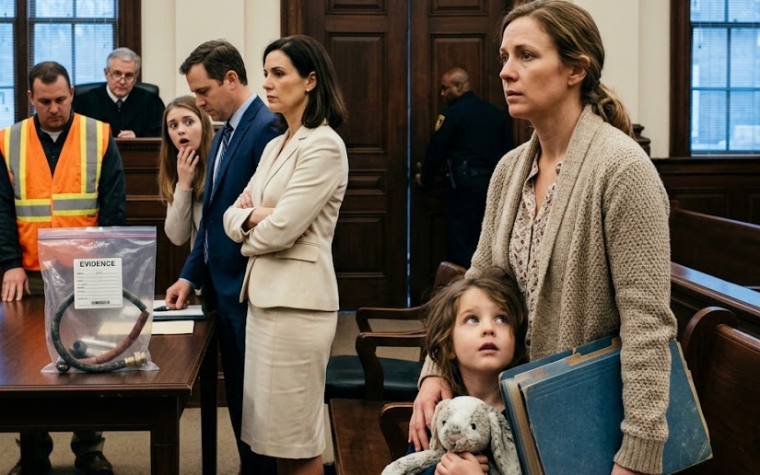
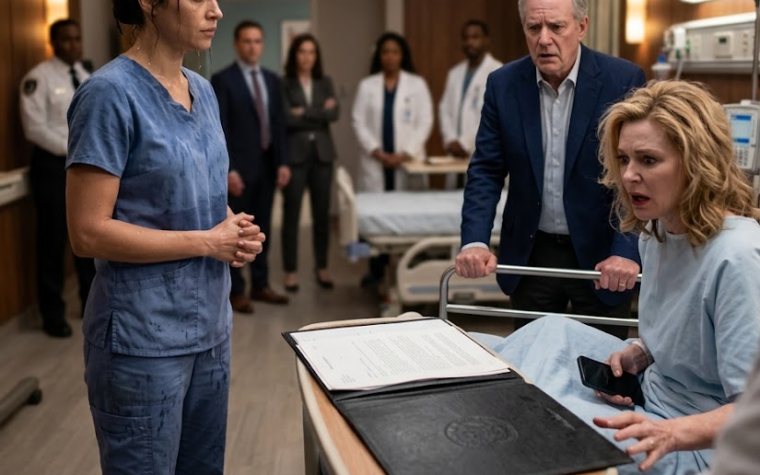
He demanded a share of the property.
He described himself as a devoted husband pushed aside by a grieving, unstable heiress.
His lawyers sent letters filled with accusations.
The trust documents answered them.
The visitor logs answered them.
The messages, recordings, security footage, and forged authorization answered them.
An investigation into the document and attempted financial control followed.
The civil claims he made against the inheritance failed.
He left the marriage with no access to the trust, no ownership in the vineyard, and no power to speak for me.
Sienna entered the recovery program our mother had selected.
I did not forgive her because she cried.
I did not restore trust because we shared blood.
She cooperated with the investigation and admitted what she had done.
She attended treatment, disappeared from my life for several months, and wrote letters I was not ready to answer.
A year later, she completed the program.
We met at the vineyard fountain on a cold morning.
She wore no bracelet.
“I hated you for getting everything,” she said.
“I never asked why Mom thought you were the one who could carry it.”
“She didn’t give me everything because I was better than you.”
“I know.” Sienna looked toward the vines.
“She restricted mine because she knew I was drowning.”
I nodded.
“And I helped someone try to drown you too.”
There was no sentence that could repair that.
So we stood in the silence and allowed it to be true.
I did not promise that we would become close again.
I told her recovery was not a transaction and forgiveness was not part of her inheritance.
She said she understood.
For once, I believed she might.
Sullivan Vineyards remained mine, but I stopped thinking of ownership as victory.
Ownership was responsibility.
I learned the business my mother had built row by row.
I attended harvest meetings, reviewed contracts, walked the property before sunrise, and listened to people Garrett had dismissed as staff but my mother had treated as guardians of the land.
In the spring, I reopened her study.
The blue cardigan was still folded over the chair where she had recorded the video.
Beside it sat a vase of white roses.
Honest, she used to call them.
Clean.
Uncomplicated.
She had been wrong about that.
Nothing living is uncomplicated.
Not roses.
Not families.
Not grief.
But honesty did not have to be simple to save you.
Sometimes it arrived as a locked door, a preserved recording, a signature that was almost convincing, and a mother who understood danger before her daughter was ready to see it.
I sat in her chair and watched the final seconds of the video one more time.
My mother looked directly into the camera.
“Eliza,” she said, “being loved and being handled can feel very similar when you are hurting.
Watch what people reach for when they believe you are too weak to stop them.”
Then her expression softened.
“You are not weak.
You are grieving.
There is a difference.”
The screen went dark.