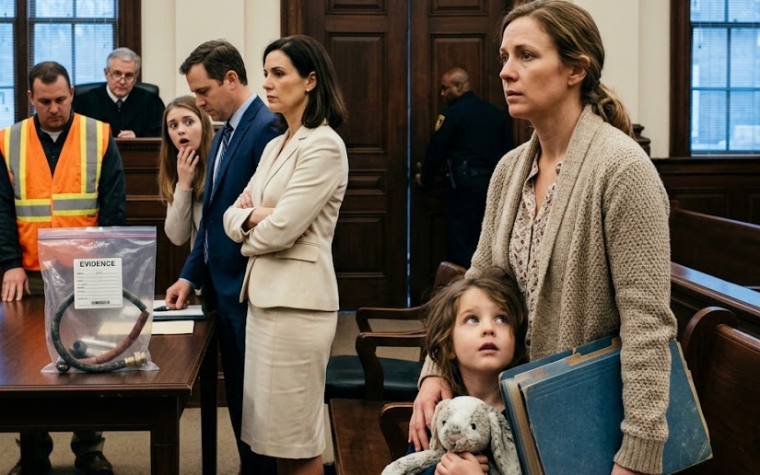
“I’m the calmest person in this room.”
That was true.
For the past seven days, I had lived through the panic already.
It began when I found the printed email beside our home computer.
The subject line read, “Bennett Property Transfer—Revised Terms.”
I had almost placed it in Mark’s office without reading it.
Then I saw my address beneath the title.
The proposed purchase price was almost ninety thousand dollars below a recent neighborhood sale.
The draft required the sellers to pay outstanding legal costs, complete several repairs, and surrender possession within thirty days.
The buyers were Diane and Robert Bennett.
The sellers were listed as Sloane and Mark Bennett.
At the bottom of the email, Mark had written, “Sloane will sign everything Sunday.
My mother wants the announcement to make it feel final.”
I had stood in our kitchen reading that sentence while Mark showered upstairs.
My first instinct was to confront him.
My second was to read every page.
The second instinct saved me.
Mark had exchanged messages with Diane for almost a month.
They discussed the house as though I were a difficult tenant.
Diane wanted the property because it sat in a rapidly appreciating neighborhood.
She planned to renovate it, refinance it, and eventually use it as a rental.
Mark had told her I was “sentimental but manageable.”
He promised that once the family praised the sale publicly, I would be too embarrassed to refuse.
Diane’s idea was simple: surround me with relatives, present the decision as an act of generosity, and make resistance look selfish.
Mark’s role was to get the paperwork and my checkbook.
They had mistaken my silence for ignorance.
The morning after I found the email, I called Evelyn Shaw, the attorney who had handled a contract dispute for one of my projects.
I sent her every page I had found.
By noon, she had confirmed what I already knew: no valid transfer could occur without my authorization.
But she also warned me not to underestimate the damage people could cause before a closing failed.
False representations could reach lenders, title companies, contractors, or insurers.
Even an invalid transaction could leave behind costs, confusion, and records that took months to correct.
Evelyn sent preservation notices and formal warnings to Mark, Diane, and Robert.
She also contacted the closing office named in the draft agreement and informed them that I had not consented to any sale.
Then she prepared the folder.
“Do not argue law with them,” she told me.
“Let the documents speak first.”
Now the documents were speaking in Diane’s dining room.
Mark opened the folder again.
The next page contained a list of preserved communications, identified by date and sender.
His name appeared repeatedly.
Diane saw it.
Her confidence cracked.
“You went through private family messages?” she asked.
“I found a proposed sale of my property on a computer in my home.”
“You had no right to read Mark’s correspondence.”
“He had no right to offer my house for sale.”
Robert raised both palms.
“This has gone far enough.
Nobody stole anything.
We were trying to help.”
“Then explain the price.”
He lowered his hands.
The room became so quiet that I could hear rainwater moving through the gutter outside.
I turned to Diane.
“You offered ninety thousand dollars less than the house’s likely market value.