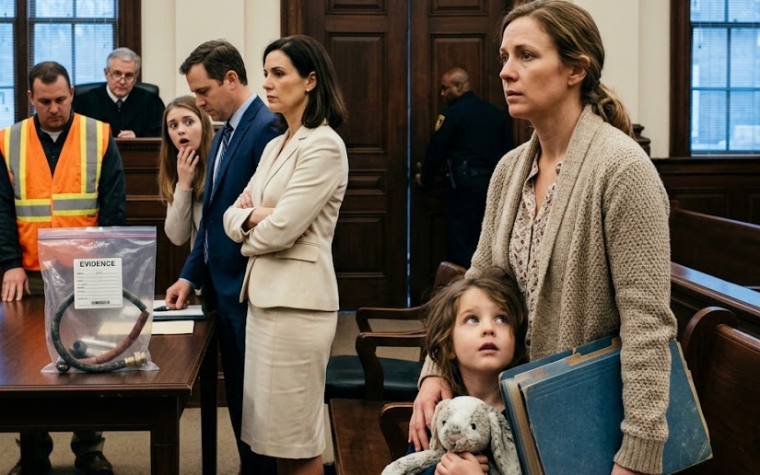
You needed ownership.”
Keith pushed the unsigned papers away.
“Fine.
Forget the house.
If this is what it takes, forget it.”
He tried to soften his voice.
“Hannah, we’re angry.
Let’s not destroy eleven years over one conversation.”
That was when I opened my folder.
Not his.
Mine.
Inside were copies of the deed, the documents I had secured, and the papers my attorney had prepared for the next stage of my life.
Keith saw them before Eleanor did.
His eyes stopped on the first page.
“What is that?”
“The reason we’re not going to have another conversation about putting your name on my house.”
His face changed.
“Hannah.”
“I heard what you said when you believed I wasn’t there.
I watched you lie to me afterward.
Then you brought transfer papers into this house and tried to make my refusal proof that I didn’t love you enough.”
I slid the papers toward him.
“I’m ending the marriage.”
For the first time since this began, Keith had no prepared line.
He stared at me, then at the papers, then back at me.
“You’re divorcing me because of a joke?”
“No.
I’m divorcing you because you spent years treating my trust as something you could convert into property.
The joke only let me hear the truth.”
Eleanor stood.
“You can’t just throw him out.”
I looked at her.
“This is exactly why I got legal advice before tonight.”
That silenced her more effectively than shouting ever could.
Keith’s panic became anger.
He accused me of planning this behind his back.
He said I was humiliating him.
He said I was letting my dead parents control our marriage.
He even accused me of choosing a building over a husband.
I listened until he ran out of accusations.
Then I said, “You chose the building first.”
He had no answer for that.
The following weeks were not dramatic in the way revenge stories make endings look dramatic.
They were paperwork, difficult conversations, separate arrangements, legal advice, financial review, and long nights in a house that suddenly sounded much larger without another person moving through it.
Keith tried several versions of regret.
First he denied that he and Eleanor had ever intended anything beyond shared ownership.
Then he admitted the conversation had been cruel but insisted he had not meant it.
Then he said his mother had pressured him.
Finally, when none of those explanations changed my decision, he told me I was proving him right by being cold.
That one almost impressed me.
Even at the end, he wanted my refusal to be evidence against me.
But the central fact never changed.
The house remained mine.
The deed remained in my name.
I never signed the transfer.
The property my parents had spent their lives protecting did not become the reward Keith and Eleanor had imagined.