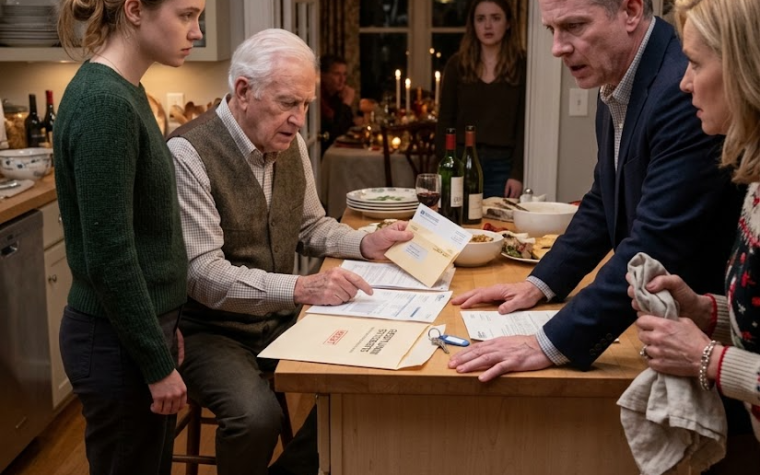
My mother looked away.
I didn’t accuse her of hiding it.
I didn’t need to.
I added it to the box.
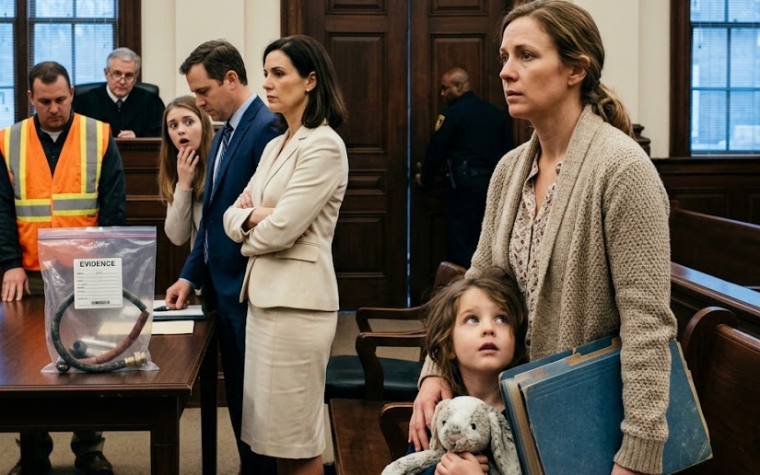
The legal dispute did not end with a courtroom spectacle.
Real consequences are often quieter.
My mother’s lawyer responded to the letter.
There were negotiations.
The records were exchanged.
Her side stopped using the word “guest” once the messages, payments, school address, and months of mail were organized together.
The issue became less about whether we had lived there and more about how the lockout would be resolved.
Eventually, an agreement was reached.
My mother reimbursed the emergency lodging costs created by the lockout and contributed toward the expenses of moving our belongings.
The agreement also closed the dispute without requiring Mia to relive that afternoon in a hearing.
I accepted because I wanted stability more than spectacle.
The money wasn’t a victory prize.
It was enough to stop the emergency from becoming a financial collapse.
Combined with what I had saved, it gave me the deposit I needed for a modest apartment closer to my clinic.
The first night there, Mia sat cross-legged on the floor because our table hadn’t arrived yet.
We ate takeout from cartons.
There were still boxes everywhere.
The apartment was smaller than my mother’s house.
The bathroom fan rattled.
The kitchen drawer stuck unless you lifted it before pulling.
Mia loved it.
“Can I have my own key?” she asked.
The question froze me.
Then I realized she wasn’t afraid.
She was asking for normal life back.
“Of course.”
The next day, I had one made.
I put it on a plain silver ring and handed it to her at the kitchen counter.
She pushed it into the front-door lock.
Turned it.
Click.
Unlocked.
Then she locked it again.
Unlocked it once more.
Three times in total.
Testing.
Making sure.
I pretended to be busy opening a box until she finished.
My mother sent messages for several weeks.
Some were angry.
Some were wounded.
Some rewrote the afternoon so completely that I almost admired the effort.
According to one version, she had merely been “setting a boundary.”
According to another, she thought I already knew we needed to leave.
In a third, she claimed she had assumed Mia would call me immediately.
I saved every message.
I answered only when necessary.
Eventually, she wrote something different.
I didn’t realize Mia would take it so hard.
I read the sentence several times.
It was not an apology.
An apology would have required her to name what she had done without making an eleven-year-old child’s pain sound excessive.