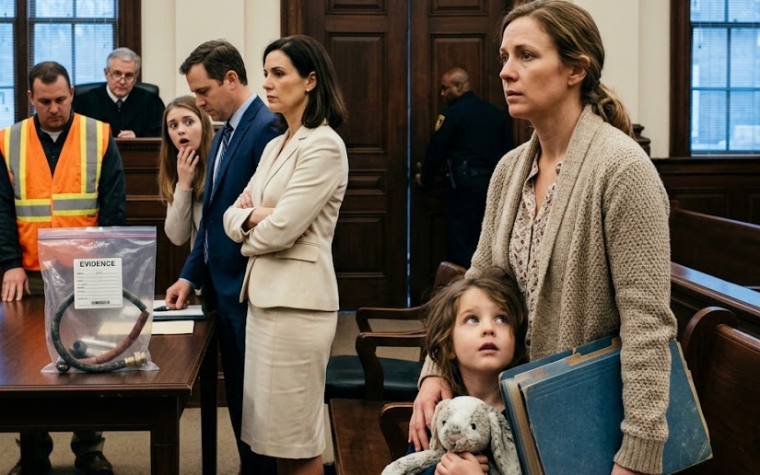
The prosecutor moved to dismiss every count related to falsified service records and fraudulent military decorations.
The judge granted the motion immediately.
The clerk removed the shadow box from the evidence table and returned it to my lawyer.
He placed it in front of me.
For months, strangers had handled those medals as though they were props in a con.
I rested my hand on the scorched edge of the unit patch but did not open the box.
Not yet.
The service accusation was dead.
The will dispute was not.
Daniel’s attorney argued that my verified military record had no bearing on the authenticity of our father’s later will.
He was almost right.
My service did not prove the will was forged.
The black folder did.
Before his illness took away his speech, Dad had discovered irregular payments flowing through six Cross Meridian vendors.
The companies appeared independent, but they shared mailing addresses, banking intermediaries, and administrative contacts connected to Daniel.
Evelyn had approved several of the contracts while serving on the company’s charitable foundation board.
Dad confronted them privately.
They denied everything.
He then ordered an internal audit and placed the preliminary findings in a restricted corporate archive.
Because some invoices involved classified defense programs, the supporting records could not be released through ordinary civil discovery.
That restriction had protected Daniel for months.
It had also given him the idea for attacking me.
He assumed anything hidden behind a security wall could be called imaginary.
The emergency authorization Vale carried did more than verify my service.
It permitted the court to inspect redacted copies of the vendor records linked to the estate dispute.
My lawyer opened our own folder.
“I move to admit the executor’s audit file,” he said.
Daniel rose again.
“There is no executor’s audit file.”
My lawyer looked at him.
“How would you know?”
The question landed harder than an accusation.
Daniel’s mouth opened, then closed.
The judge admitted the redacted records provisionally.
The first page showed payments routed from Cross Meridian into consulting firms that had no employees, no functioning offices, and no evidence of completed work.
The second showed that Daniel had authorized emergency vendor renewals while Dad was receiving inpatient cancer treatment.
The third contained Evelyn’s approval signature.
She leaned forward in the witness chair.
“That is not my signature.”
My lawyer placed her sworn affidavit beside it.
The signatures matched.
“It was presented differently,” she said.
“Daniel told me it was routine.”
Daniel turned toward her.
“You reviewed every payment.”
“No, I did not.”
“You chose the vendors.”
“You brought them to me.”
Their alliance did not collapse dramatically.
It cracked one sentence at a time.
The final section of Dad’s audit concerned the supposed replacement will.
The document was dated during the last week of his life.
It claimed he had regained enough strength to revoke my controlling interest, remove me as executor, and transfer nearly everything to Daniel.
Evelyn had testified that she watched him sign it.
Hospital records showed Dad could no longer hold a pen on that date.
Medication logs showed he was unconscious for most of the evening.