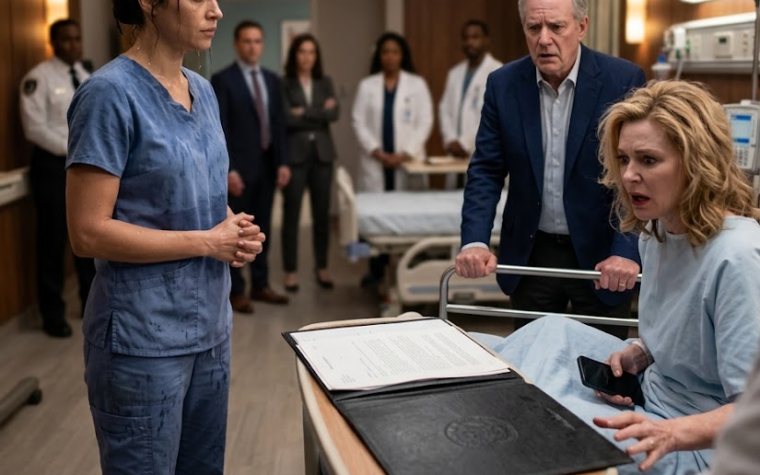
When the doctor finally removed the ventilator tube, Rosalie made a small, furious sound.
It was not a graceful first cry.
It was thin and raspy and perfect.
Brooklyn covered her mouth.
“She’s loud,” she whispered.
I laughed for the first time since the surgery.
“Yes,” I said.
“She is.”
Rosalie spent twenty-eight more days in the hospital learning to breathe, regulate her temperature and take milk without exhausting herself.
During that time, my incision healed.
Kevin returned to work part-time.
Brooklyn began meeting with a child therapist who helped her understand that she had witnessed something frightening but had not caused it.
The therapist asked Brooklyn what she wanted adults to know.
“When kids say something bad happened,” she answered, “don’t tell them they dreamed it.”
I wrote those words down.
The legal process moved more slowly than the hospital had.
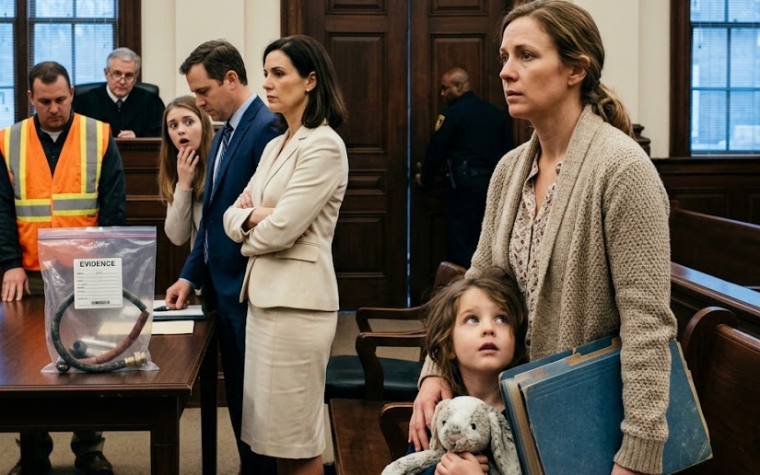
My mother’s attorney argued that she had only attempted to correct equipment she believed was loose.
The hospital’s respiratory specialist explained that the line had been secure until the moment shown in the recording.
The alert data matched the movement of her hand.
My mother eventually accepted an agreement that included supervised probation, mandatory counseling, a continued protective order and a permanent prohibition from entering the children’s hospital except for her own verified medical emergency.
The court also required her to acknowledge that she had intentionally handled Rosalie’s respiratory equipment without permission.
She did not apologize to us.
My father sent a letter accusing me of choosing strangers over blood.
Courtney sent one claiming motherhood had made me unstable.
Both letters were returned through our attorney without a response.
Months later, Courtney tried once more.
She wrote that having her own baby had helped her understand why I had stayed at the hospital.
She did not mention calling Rosalie’s condition drama.
She did not mention defending our mother after seeing the recording.
I read the message twice.
Then I saved it with the other evidence and did not answer.
Understanding after consequences is not always remorse.
Sometimes it is only fear that the door will remain closed.
Rosalie came home on a rainy Tuesday afternoon weighing six pounds, nine ounces.
There were no balloons.
No cake from Molina’s.
No relatives waiting with cameras.
Kevin carried the diaper bag.
I carried Rosalie in her car seat.
Brooklyn walked beside us with one hand gripping my coat and the other holding the purple picture she had drawn in the NICU.
That night, I placed Rosalie in the bassinet beside our bed.
Without the ventilator, the room felt impossibly quiet.
I kept leaning closer to make sure her chest was moving.
Brooklyn appeared in the doorway wearing the same unicorn hoodie she had worn in the hospital.
“Is Grandma ever coming here?” she asked.
For most of Brooklyn’s life, I had protected my mother’s image.
I had softened insults, hidden favoritism and translated cruelty into phrases a child could survive.
This time, I told the truth without giving her more fear than she needed.
“No,” I said.
“Grandma made an unsafe choice, and she is not allowed near you or Rosalie.”
Brooklyn looked at the bassinet.
“Is it because I told?”
I knelt in front of her.
“No.
It is because of what she did.
Telling the truth helped keep Rosalie safe.”