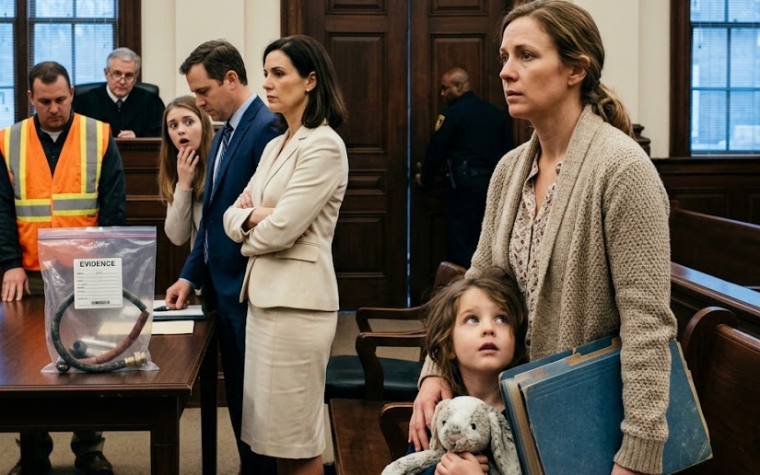
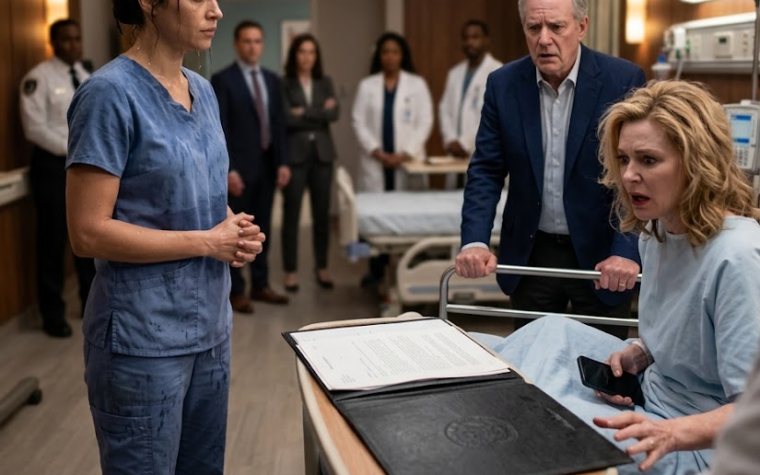
She said the moment she realized the house was actually mine, she had felt sick remembering herself standing in the second bedroom imagining a nursery.
I told her she hadn’t known.
That part was true.
I didn’t offer them the house.
That part mattered too.
Months later, the bungalow finally looked finished.
I moved the mattress off the floor and bought a real bed.
I repaired the last section of peeling wallpaper.
I replaced the kitchen light.
I filled the shelves with photographs I’d taken over the years instead of leaving them stored on hard drives.
The second bedroom remained a second bedroom.
Sometimes it was empty.
Sometimes visiting friends used it.
Sometimes I piled photography equipment on the bed.
Nobody needed to justify the room’s existence.
It was mine.
Eventually, I invited my father, my brother, and his wife over for dinner.
My mother wasn’t there.
Not because I wanted revenge, but because forgiveness and access had stopped meaning the same thing to me.
My brother stood in the kitchen looking at the faucet I’d installed myself.
“You really did all this?”
I nodded.
Years earlier, that question might have sounded patronizing to me.
This time it sounded different.
He was actually looking.
Not at the quiet sister who always managed.
Not at the person who needed less.
At the work.
At the house.
At me.
My mother and I eventually spoke again.
The conversation wasn’t dramatic.
There was no perfect apology that repaired everything in one afternoon.
She admitted taking the key was wrong.
She admitted she had assumed I would eventually give in because I usually avoided conflict.
She still tried to explain why she’d thought my brother’s need was more urgent.
I told her urgency didn’t create ownership.
That sentence ended the argument.
The security cameras stayed.
So did the new locks.
And the closing folder remained in a safe place where nobody else could touch it.
Sometimes, late in the evening, I sit in the living room with the warm lamps on and think about the moment I first saw my mother walking through my home on that tiny screen.
For years, I thought being strong meant proving I could survive without asking anyone for anything.
I understand it differently now.
Strength can also be a locked door.
A returned key.
A quiet no that doesn’t become yes simply because somebody dislikes hearing it.
The bungalow never became glamorous.
The stairs still creak.
The neighborhood is still old.
There is always another repair waiting somewhere.
But when I unlock the front door, nobody else’s permission follows me inside.
That was what I had really bought.
Not two bedrooms.
Not warm wooden shelves.
Not a little patch of property with peeling wallpaper.