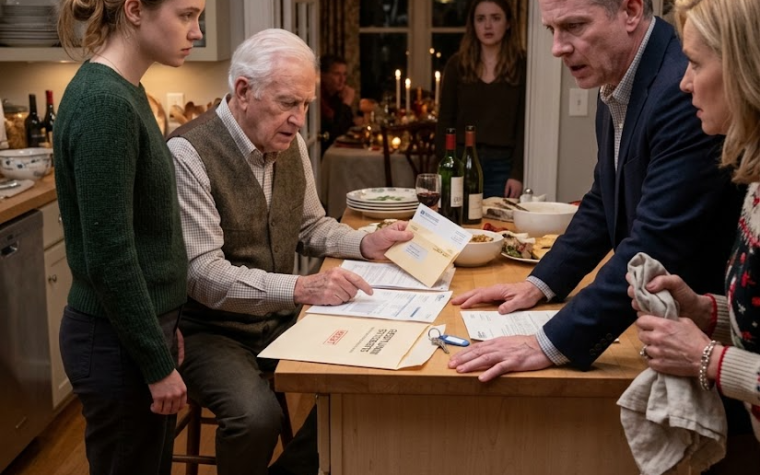
For a moment, there was only a faint hiss.
Then my grandmother’s voice filled the room.
It was weaker than I remembered, but unmistakably hers.
“My name is Eleanor Hart.
I know the date.
I know where I am.
I know what I own, and I know the members of my family.”
Ryan looked toward the door.
My father lowered himself into his chair.
My grandmother continued.
“I am leaving my home and remaining property to Evelyn because she is the one who showed up without asking what she would receive.
She brought groceries when I forgot to request them.
She changed my sheets when my hands hurt.
She sat with me when the house became too quiet.
She never once asked about my money.”
My vision blurred.
I did not wipe my eyes.
I did not want to miss a word.
“I have heard my daughter say that Ryan needs security because he has a life to build, while Evelyn will manage because she always does.
That is not praise.
It is permission to keep taking from her.”
My mother made a strangled sound.
“She misunderstood me.”
The recording continued over her.
“If my family calls this unfair, they should ask themselves why fairness only matters when Evelyn receives something.”
Silence followed.
Then the small click of the recording ending.
No one moved.
My grandmother had not shouted.
She had not condemned them.
She had simply described what they had done so clearly that denial looked childish.
My mother turned toward me.
“You told her things about us.”
“I didn’t have to.”
“What is that supposed to mean?”
“She watched.”
My mother’s chair scraped back.
“I visited her.”
“Twice in her last month.”
“I had responsibilities.”
“So did I.”
“You don’t have children.”
The old weapon.
Every hour of my life was considered available because I had no husband and no children.
My work could be interrupted.
My weekends could be claimed.
My exhaustion was negotiable.
Ryan pointed toward the recorder.
“She was obviously bitter.
Old people get ideas.”
Mr.
Bellamy’s expression hardened.
“Be careful, Mr.
Hart.
Grief does not excuse contempt.”
Ryan turned on me instead.