I could forgive desperation.
I could not reward entitlement disguised as love.
I changed every access code at my house.
I replaced the garage remotes, updated the alarm permissions, moved important documents into a secure box, and removed my mother from every emergency contact list.
Those actions felt colder than I wanted them to.
They also felt necessary.
Months later, an envelope arrived from my mother.
The return address belonged to her attorney.
Inside was a handwritten letter.
She wrote that she missed me.
She wrote that the family had been torn apart.
She wrote that she hoped I would eventually understand the pressure she had been under.
Near the bottom, she added, “I wish you had simply helped Hannah when we asked.”
I read the sentence twice.
Then I placed the letter back in the envelope.
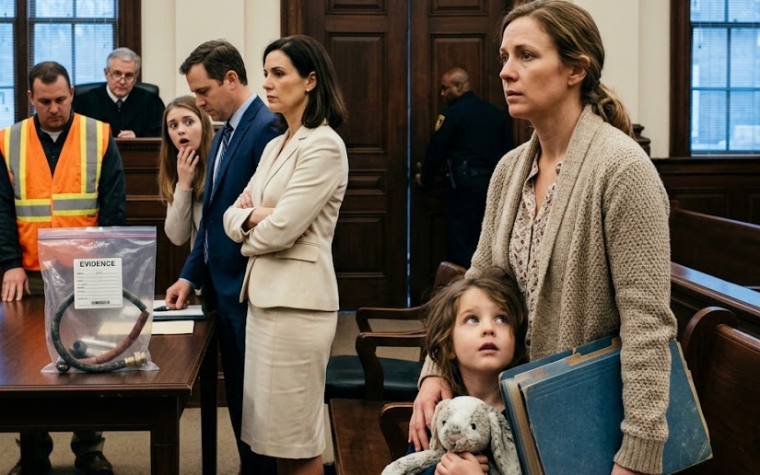
Even after the police, the forged documents, the court hearings, and the judge’s words, she still believed my refusal had caused her crime.
That was when I finally stopped waiting for an apology capable of repairing anything.
The following morning, I drove the Mercedes along the coast before sunrise.
The road was nearly empty.
The ocean appeared silver beyond the guardrail, and the first light caught the black hood in brief flashes.
For years, I had thought the car represented success.
After everything that happened, it represented something simpler.
Ownership.
Not just of the vehicle, but of my choices, my boundaries, and the life I had built.
My mother had believed she could sell one symbol of my freedom and force me back into the role she preferred.
Instead, she proved why I had needed that freedom in the first place.
I did not win because the police knocked on her door.
I won the moment I stopped arguing, opened the evidence, and allowed the truth to speak in a language she could not redefine.