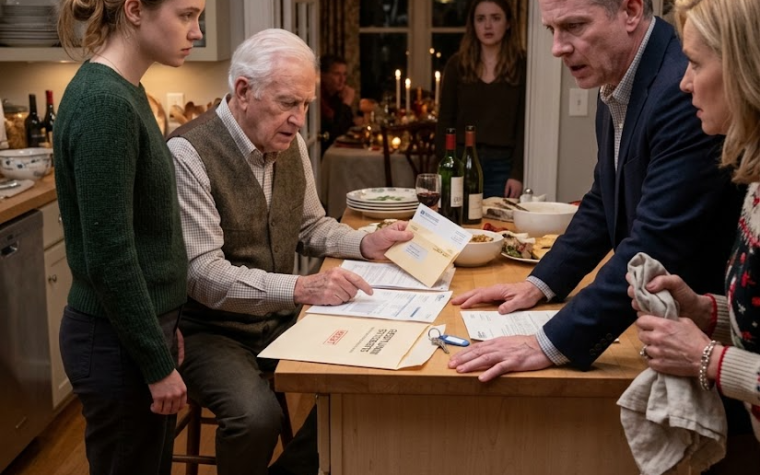
“I prevented it by saying no.”
Britney sent the ugliest message three days after she was interviewed.
She wrote that I had always enjoyed making her feel small.
She said the Army had turned me cold.
She claimed I had shoved her before she threw the coffee and threatened to tell the police that I had started the fight.
I did not argue.
I saved the message.
The next morning, I added it to the case file.
Her accusation collapsed under its own timing.
During the first six weeks after the breakfast incident, Britney had never claimed I touched her.
Neither had my parents.
Their messages described her as losing control, making a mistake, and reacting emotionally to my refusal.
The kitchen had also contained more evidence than anyone realized.
My father had installed a small security camera above the back door after several packages disappeared from the porch.
It captured part of the kitchen and recorded audio.
He had forgotten it was there.
The footage showed me seated at the table with my hands visible.
It showed Britney stand, lift the mug, and throw the coffee.
It captured my mother saying, “Britney, what did you do?”
It showed me leave without touching anyone.
My father initially claimed the footage had been deleted automatically.
Investigators recovered it from the cloud backup.
That was the moment the family’s preferred story ended.
Britney could no longer call the burn an accident.
My parents could no longer describe themselves as people who had seen nothing.
The same household that had protected her with silence had preserved the proof without knowing it.
The prosecutor offered Britney a choice: contest the evidence or accept responsibility through a plea agreement covering attempted identity theft, fraudulent loan applications, and the coffee assault.
She chose the agreement.
My father was not charged with the same offenses, but his recorded verification call made him a witness.
He had to admit, formally, that he had lied to a lender because Britney told him I would eventually approve.
That admission changed him.
For the first time, he stopped calling the situation a misunderstanding.
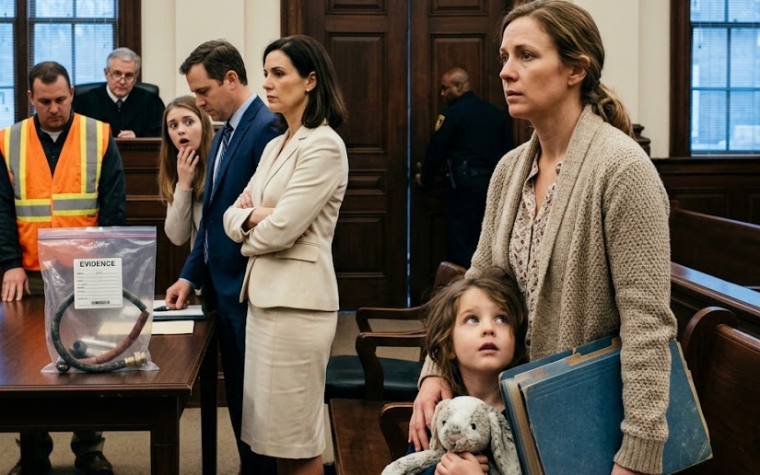
The court hearing took place four months after the breakfast incident.
I attended remotely from Colorado Springs.
Britney sat beside her attorney in a plain dark blouse, her shoulders drawn inward.
My parents sat behind her on a wooden bench.
She looked smaller than she had in the kitchen, but not because I had made her small.
The room had removed the audience that always protected her.
There was no mother interrupting to translate cruelty into stress.
No father staring at his plate until the moment passed.
No family history available as currency.
There were only questions and answers.
When the judge asked Britney why she believed she had permission to use my identity, she began with the same excuses.
She needed transportation.
Her loan had been rejected.
She intended to make every payment.
Then the judge asked the question no one at the oak table had asked.
“After your sister explicitly refused, why did you proceed?”
Britney looked toward my parents.
Neither of them moved.
Finally, she said, “Because she always fixes things.”
The room went quiet.
That sentence explained more than every argument we had ever had.
I had paid the rent shortfall.
I had cleaned up the store-card problem.
I had absorbed phone bills, late fees, emergency requests, and family pressure.