“That isn’t my room anymore.”
That was when I looked back through the doorway.
The shape beneath the sheet was still there.
Ezekiel saw me looking.
His face tightened again.
I walked into the room and pulled the sheet back.
Pillows.
Three of them arranged beneath blankets to resemble a body from the doorway.
For a moment, nobody spoke.
The nurse looked at Ezekiel.
“Who did this?”
He answered too quickly.
“I don’t know.”
Grace closed her eyes.
“Ezekiel.”
“It wasn’t supposed to be like this.”
That was the first admission.
Not a confession to every detail.
But enough to make the hallway feel suddenly much more serious.
The nurse called her supervisor.
Within minutes, Grace and the baby were moved into another room.
Ezekiel was told to remain outside the patient area while staff reviewed what had happened.
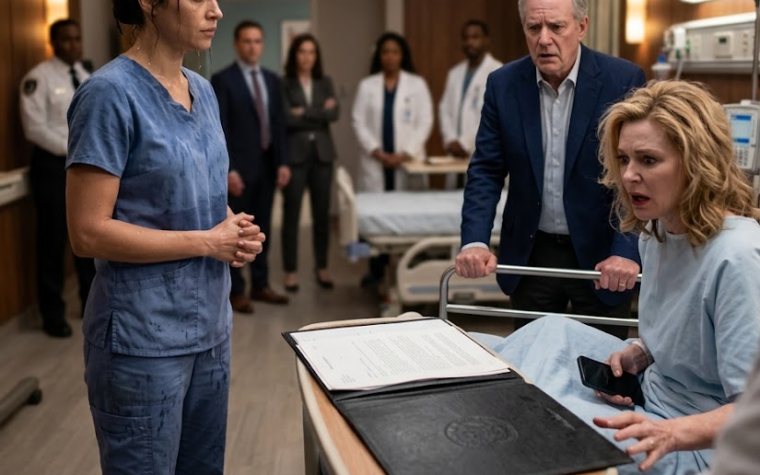
I sat beside Grace while a nurse checked her blood pressure and another wheeled the bassinet close enough for her to touch her son’s blanket.
My grandson was small and furious and alive.
Grace rested two fingers against his cheek and began to cry.
“He told me you were done with me,” she whispered.
“Never.”
Then I corrected myself.
“I might get angry.
I might say the wrong thing.
I might need you to tell me when I’m crossing a line.
But I would never hear that you were in this hospital and decide not to come.”
She nodded.
For the first time that night, we spoke to each other instead of through Ezekiel.
The truth came out slowly.
Grace had told him days earlier that she wanted to stay at my house after the birth.
She wasn’t promising divorce.
She wasn’t threatening to keep their child from him.
She said she needed distance and time to think.
Ezekiel heard only abandonment.
During the emergency delivery, Grace had required surgery and spent hours groggy afterward.
Ezekiel had her phone.
When she asked whether I had come, he told her I had refused.
When I arrived, he told me Grace and the baby were dead.
He later requested that Grace be moved to a quieter room, telling staff there was family conflict and that visitors might upset her.
The pillows in 212, he eventually admitted, were his idea.
He wanted the room to look occupied from the hallway long enough to keep anyone from asking why it was empty while Grace was being transferred.
He had planned to take her to another floor that night and push for an early discharge the next morning.
Then he intended to drive her to his sister’s house several hours away.
Grace had known about the possible stay with his sister.
What she had not known was that he had told me she was dead.
And she had never agreed to disappear from my life.
When Ezekiel was finally allowed to speak with Grace again, a hospital supervisor remained in the room.
I offered to leave.
Grace asked me to stay.
Ezekiel stood near the door with his arms folded.