Thomas did know.
Everyone did.
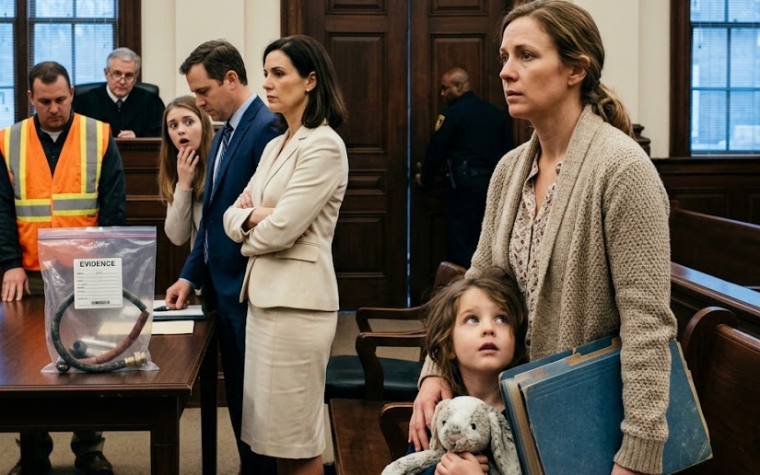
He looked at the folder, at Richard’s letter, at me, and finally at Charlotte.
For one moment, I saw the boy he had been—the little boy who used to run down the hallway when Richard came home and launch himself into his father’s arms.
Then the moment disappeared.
Thomas walked out.
Victoria remained seated for two stunned seconds before grabbing her bag and following him.
The door closed behind them.
Nobody celebrated.
That was important.
Richard was dead.
My son had failed him.
My granddaughter had just learned that her future carried a burden she never requested.
There was no victory in that room.
Only consequence.
Over the following weeks, Thomas did exactly what he threatened to do.
Lawyers examined the estate documents.
Questions were raised about Richard’s illness, his intent, my authority, and the structure of the succession clause.
Nothing changed.
Walter had been right.
Richard had prepared for resistance with the same discipline he had brought to every major decision of his business life.
The stewardship arrangement remained intact.
Mitchell Shipping continued under its senior leadership rather than placing Charlotte into a position she had not earned.
She began attending company meetings, learning operations, reading reports, and spending time with the people who actually kept ships moving and customers served.
One afternoon she asked me whether Richard would have expected her to run the company someday.
“He would have expected you to become capable before you expected anyone to hand you authority,” I told her.
She smiled sadly.
“That sounds like Grandpa.”
It did.
Thomas did not speak to me for several weeks.
When he finally called, his voice was quieter.
He did not apologize.
Not yet.
He asked one question.
“Did Dad really think I was that bad?”
I closed my eyes.
“Your father never stopped loving you.”
“That isn’t what I asked.”
“No.
He didn’t think you were bad.
He thought you had spent so long being protected from consequences that you had forgotten other people paid for your choices.”
Thomas said nothing.
Then he disconnected.
I never pretended one conversation repaired what decades had damaged.
Richard’s clause was not magic.
Losing the company could not create character inside Thomas.
It could only remove the reward he had assumed would arrive regardless of the man he became.
Months after the funeral, I returned to the cemetery with Charlotte.
The weather was clear this time.
We stood before Richard’s grave without a canopy, without hundreds of witnesses, without an empty chair demanding to be noticed.
Charlotte placed flowers beside the stone and stepped away to give me privacy.
I touched Richard’s name with my fingertips.
For most of Thomas’s life, I had believed loving my son meant standing between him and every hard consequence.
Richard had understood something I had refused to see.
Sometimes standing in the way of consequences does not save the person you love.
Sometimes it teaches them that love will always pay their bill.