But one question remained.
“Who poisoned her?”
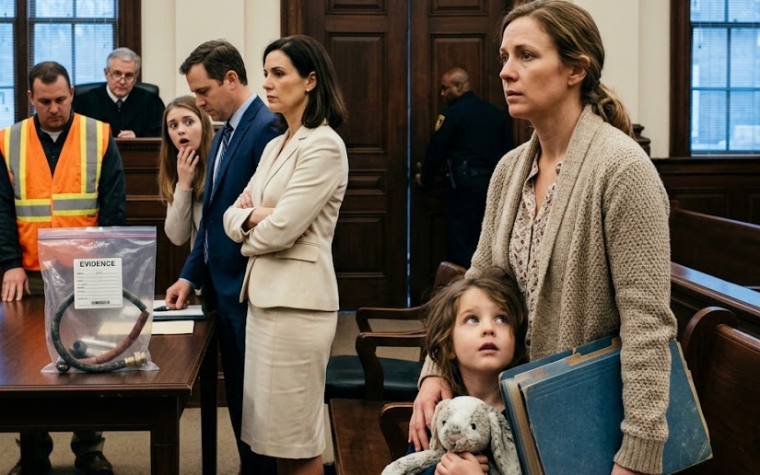
Nobody moved.
I looked at Dennis.
He looked at his wife.
She looked at Raymond.
Raymond stared down at Miriam’s journal.
Then he said the words I had not been prepared to hear.
“Miriam knew before any of us realized she knew.”
I gripped the back of my chair.
“That’s in the journal.”
“No,” Raymond said.
“Not all of it.
She confronted me.”
The sentence struck harder than everything else that night.
“When?”
“Three weeks before she died.”
I could barely speak.
“You saw her?”
“Alone.”
Dennis whispered, “You told us she didn’t know.”
Raymond closed his eyes.
There it was again.
Us.
Raymond opened his eyes and looked directly at me.
“She knew Dennis had been trying to get control of the assets.
She knew his wife had been helping him pressure you.
She suspected Mercer was hiding medical information.
And she knew someone had been tampering with what she was taking.”
“And you?”
His face folded with something that looked like shame.
“She knew I had helped Dennis.”
My oldest friend had spent years advising me on investments, paperwork, insurance, and family decisions.
He knew what we owned.
He knew how stubborn Miriam could be when she thought someone was trying to rush me.
And he had used that trust against us.
“Why?”
Raymond’s answer was almost too quiet to hear.
“Dennis said he only needed leverage.
He said once you agreed to restructure things, everything would stop.”
I stared at my son.
“Everything?”
Dennis started crying.
Not loudly.
Not theatrically.
His face simply collapsed.
“Dad, I never wanted her dead.”
Those were the first words anyone said that sounded like a confession.
His wife grabbed his arm.
“Don’t.”
He pulled away from her.
“I thought she was just going to get sick enough to stop fighting us.”
My chair seemed to disappear beneath me.
I sat.
For six months I had imagined Miriam’s final morning as an inexplicable medical catastrophe.
Now my own son was telling me her suffering had been used as pressure.