For eight years, I had pictured our parents’ last drive as random bad luck on a wet county road.
I had never imagined there had been a destination waiting at the end of it.
A farm.
An uncle.
A plan for us.
The next packet hurt worse.
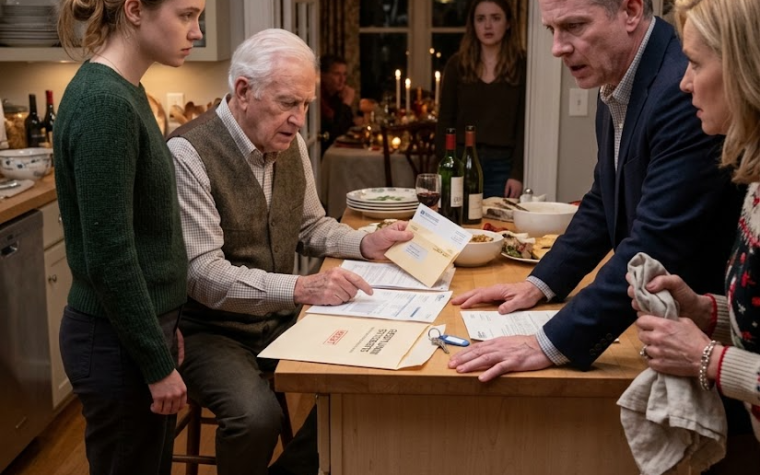
The first page was a petition for temporary guardianship filed by Samuel Reed less than two weeks after the funeral.
Then another filing.
Then another.
There were copies of letters addressed to relatives whose names I remembered from the funeral.
There were money orders made out to St.
Agnes.
There were receipts for certified mail.
Uncle Sam had not disappeared after our parents died.
He had tried to get us.
Emma covered her mouth.
I felt something inside me turning over slowly, like soil beneath a plow.
“Why didn’t he?”
Mr.
Bell kept reading.
The answer was scattered across several documents rather than written in one dramatic sentence.
When our parents died, the farm was already carrying debt.
Uncle Sam had recently injured his shoulder and missed a season of work.
The farmhouse needed electrical repairs.
The court report described him as a single working farmer with unstable income and a residence that did not yet meet placement standards for two children.
None of that meant he was unfit.
It meant he was poor at exactly the wrong moment.
The temporary placement went to St.
Agnes while relatives were evaluated.
No relative agreed to take both of us.
Uncle Sam kept applying.
He rewired the upstairs bedrooms.
He repaired the furnace.
He paid down a tax lien.
He sent photographs of finished rooms to the case office.
He submitted another guardianship request.
And another.
I found the report from the visit Emma remembered.
The date matched.
I had been thirteen.
Samuel Reed visited minors Daniel and Emma Reed at St.
Agnes Children’s Home.
Daniel declined extended conversation.
Emma interacted appropriately.
Prospective guardian reports continued intention to prepare residence for placement.
My face burned.
I remembered Uncle Sam sitting across from me with those peppermint sticks.
I remembered refusing to look at him.
At thirteen, I had believed his awkward silence meant he did not care enough to fight for us.
The box showed the opposite.
He had already been fighting for two years.
“Why did the Christmas cards stop?” Emma asked.
Neither of us had meant for the question to sound accusing, but it did.
Mr.
Bell searched through another group of papers.
He found the answer before we did.