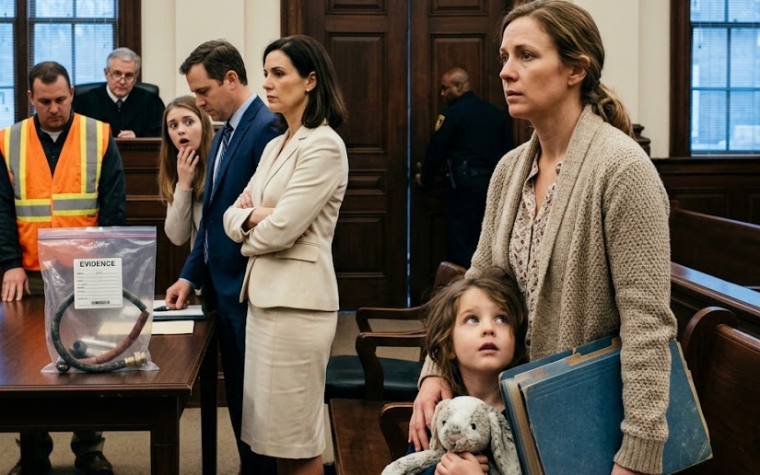
David opened the cream folder beside my hospital bed.
Victoria stopped breathing for a second.
I saw it happen—the tiny collapse in her face when she recognized the papers inside.
“Please,” she said again.
“Tell them to revoke the order.”
Her voice had changed completely.
No contempt.
No smug little smile.
No talk about family legacy.
Just fear.
I looked at David.
“What happened?”
He pulled a chair closer to my bed but never took his eyes off his sister.
“Before we talk about anything else, the twins are stable.
The doctors are monitoring them closely.
You’re staying here.”
I closed my eyes for a moment.
Stable.
That word was enough to let me breathe.
Then I looked back at Victoria.
“What order?” I asked, even though I already suspected the answer.
Victoria took one step forward.
Security immediately blocked her.
“Don’t do this,” she said.
“You’ve made your point.”
That almost made me laugh.
My point?
Hours earlier, I had been on my kitchen floor begging her to call an ambulance while she tried to force my fingerprint onto a banking app.
David placed the folder on the tray beside me.
Inside were the withdrawal papers Victoria had brought to the house.
Beneath them were copies of additional documents recovered from the kitchen and a printed record David had received after landing.
He tapped the first page.
“The transfer attempt triggered the safeguard you put on the trust.”
Weeks earlier, I had noticed inquiries touching the twins’ account that made no sense.
Nothing had been taken, but someone was testing access—checking authorization pathways, transfer limits, and beneficiary restrictions.
My old instincts came back immediately.
For seven years I had traced financial misconduct for a living.
People imagined fraud looked dramatic: fake names, offshore accounts, suitcases of cash.
Most of the time, it began quietly.
A copied signature.
A changed mailing address.
A request that could later be explained away as a misunderstanding.
I had not accused Victoria because I did not yet have proof.
Instead, I had contacted the institution holding the trust and strengthened the controls around it.
Any unusual attempt involving altered authorization, biometric coercion indicators, or conflicting transaction information would freeze movement from the account while the activity was reviewed.
More importantly, I had requested that suspicious attempts connected to the trust be preserved rather than quietly rejected.
Victoria had believed a failed transfer meant nothing happened.
In reality, her repeated attempts had created evidence.
David continued.
“When the account locked, the fraud team reviewed the authorization documents.
Then they compared the signatures and routing instructions with the trust records.”
Victoria shook her head quickly.
“She’s exaggerating.
I had permission.”
“From whom?” I asked.
“David.”