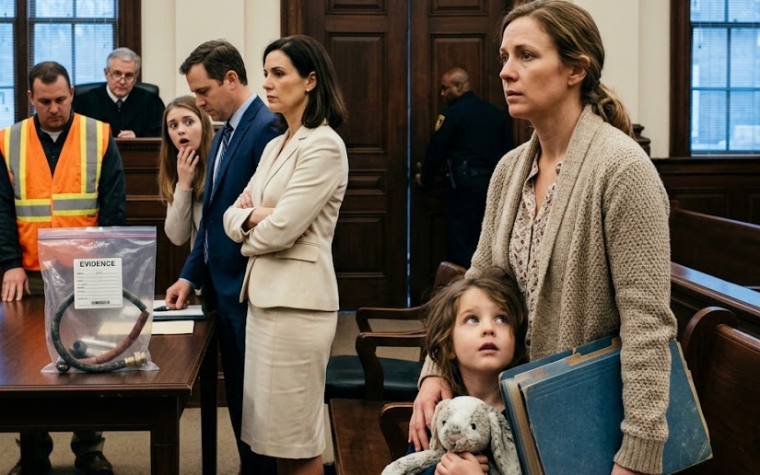
“Play it.”
Evelyn’s voice filled the office.
It was thinner than I remembered, but calm.
She stated her name and the date.
She confirmed that she understood the value of the building, the contents of her will, and the effect of transferring the property before her death.
Then she spoke about me.
“My husband does not know about the purchase,” she said.
“He did not ask me to buy it, and he has never asked me to change my will in his favor.
He married me for security.
I have always known that.”
Her niece looked toward me, expecting triumph perhaps, but I could not lift my eyes.
Evelyn continued.
“Knowing why someone entered your life does not always tell you why they stayed.”
I stopped breathing.
She described the morning she collapsed.
I had believed she was unconscious when I found her on the kitchen floor.
She had heard me speaking to the emergency operator.
She heard me give our address twice because my voice was shaking.
She remembered me kneeling beside her, begging her to keep looking at me.
I did not remember begging.
I remembered only fear.
Not fear of losing the house.
Not in that moment.
Fear of the chair across from mine being empty.
Fear of entering the kitchen and not hearing her humming.
Fear that I had waited too long to become someone capable of thanking her.
The recording ended with Evelyn giving direct instructions.
The house was to remain with her niece.
Her savings were to go to the charities named in the will.
The workshop and apartment were mine because, in her words, a home inherited through waiting for death would have destroyed me, while a home built through work might save me.
The recorder clicked off.
No one spoke for several seconds.
Her niece was the first to move.
She wiped beneath one eye angrily and stood.
“She should have told me.”
“She wanted the will read before the box was opened,” the attorney said.
“She believed everyone’s honest reaction mattered.”
The niece looked at me.
I expected another insult.
Instead, she said, “She loved that house.
I won’t let you take anything from it.”
“I won’t.”
“She left her jewelry and photographs to us.”
“I know.”
“And I’m still not forgiving you.”
“I’m not asking you to.”
That answer seemed to surprise her.
She left the office with the relatives following close behind.
The attorney gathered the documents and returned them to the folder.
Before handing it to me, he said Evelyn had visited the workshop twice.
The first time, she inspected the apartment.
The second time, she stood in the center of the empty workroom and asked where a heavy repair table might fit.
“She was planning this for months,” he said.
“Why didn’t she confront me?”
“She believed shame would make you run.
She wanted to see whether kindness would make you stay.”