“You don’t even know who she is.”
“No,” Adrian said.
“Not yet.”
The DNA test could not produce an immediate laboratory result, but Adrian had something else.
His lawyer contacted the investigator who had spent years maintaining the file on his missing daughter.
Within the hour, digital copies of old records reached the restaurant.
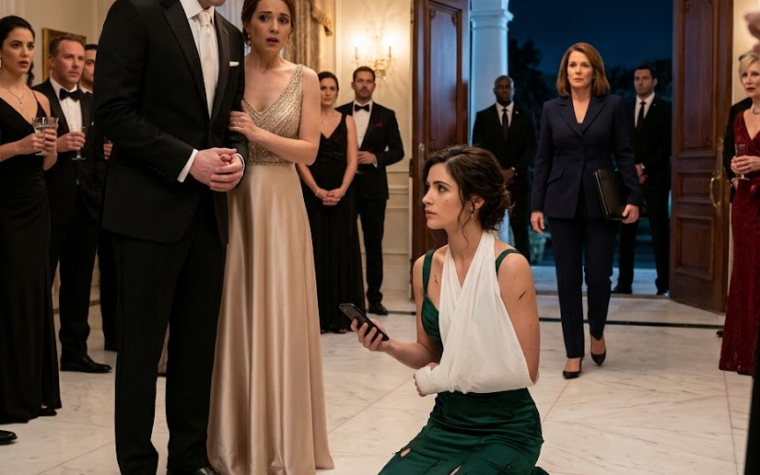
I stood in Adrian’s private office wearing his jacket over my ruined blouse while the dinner outside dissolved into whispered conversations and departing guests.
The investigator’s file contained photographs of a five-year-old girl.
I stared at them until my vision blurred.
The child had my eyes.
She also had the birthmark.
But resemblance was not proof.
Adrian seemed determined not to pressure me.
He sat across the room and let his lawyer speak.
The disappearance date matched the year I entered the foster system under an unidentified-child report.
My estimated age matched.
The description of the clothing I had been wearing when authorities found me matched details from his daughter’s disappearance file closely enough to make coincidence difficult to dismiss.
Then the investigator found something else.
The bus station.
A report from twenty years earlier recorded that an unidentified five-year-old girl had been found alone near a vending area after staff realized she had remained there for hours.
My chest tightened.
I had always assumed the woman in the gray coat was my mother.
Adrian’s file suggested otherwise.
She had never been identified.
His daughter had vanished earlier that same day.
Celeste appeared in the office doorway before anyone invited her inside.
Her makeup was no longer perfect.
Her voice had lost its practiced laziness.
“You’re actually doing this?”
Adrian turned.
“You were told to wait downstairs.”
“For what? Police?”
His lawyer answered.
“For investigators.”
Celeste stared at me.
“This is because of her?”
“No,” I said.
“This is because of what you did.”
She laughed bitterly.
“You think one birthmark makes you important?”
I felt the old instinct to shrink.
The instinct had kept me safe in foster homes, kitchens, warehouses, and every place where being invisible meant avoiding trouble.
I ignored it.
“No.
I think evidence makes your actions difficult to hide.”
Her eyes flicked toward my phone.
That was when Adrian’s lawyer asked the question that truly frightened her.
“Celeste, who authorized the charity wine accounts?”
She hesitated.
“The restaurant did.”
“Which person?”
“I don’t remember.”
The manager, standing behind her, looked down.
Adrian noticed.
“Tell me.”
The manager’s shoulders collapsed.