Facts simply stayed where you put them.
The dog was taken for emergency veterinary care.
Walter followed.
He had planned to spend that afternoon hauling rotted lumber and clearing brush.
Instead, he sat under fluorescent lights with dirt dried on his trousers and a fresh scrape across his palm from the broken hasp.
The examination confirmed what the backyard had already suggested: the animal was severely dehydrated, overheated, frightened, and exhausted.
But alive.
That word mattered more than every other word Walter heard.
Alive.
The dog would need fluids, observation, food introduced carefully, and time.
Walter nodded at every instruction even though nobody was asking him to make medical decisions.
He had found the animal, not owned it.
Procedures existed.
Reports had to be made.
Questions about custody and history would have to be answered.
Still, he stayed.
At one point, someone asked whether he wanted to leave a phone number in case more information was needed.
Walter wrote it twice, once on the form and once on a separate scrap of paper.
“Call me for anything,” he said.
He returned to the foreclosure late that afternoon.
The backyard seemed different.
The refrigerator was still there, but its door now stood open.
Sunlight filled the empty interior.
Walter looked at the broken hasp and felt anger finally arrive now that urgency no longer had somewhere useful to go.
He did not kick the appliance.
He did not throw the lock.
He photographed everything again.
Then he removed the refrigerator door completely.
He carried it away from the box and laid it flat where it could never trap anything again.
For the next several days, the house renovation slowed.
Walter still worked, but his phone stayed close enough that he could hear it over the mower, saw, or shop vacuum.
Updates came.
The dog was improving.
It had begun drinking normally.
Then eating.
Then standing for longer periods.
Its fear remained harder to measure.
When a metal door closed nearby, it startled.
When someone approached too quickly, it retreated.
Walter understood that kind of recovery better than he wished he did.
Survival could happen in a moment.
Feeling safe again took longer.
The investigation into how the dog had ended up inside the refrigerator was less simple.
The house had been through foreclosure.
People had moved out.
Debris had been abandoned.
Ownership of the property had passed through financial and legal steps before Walter bought it.
There was no neat answer waiting beneath the padlock.
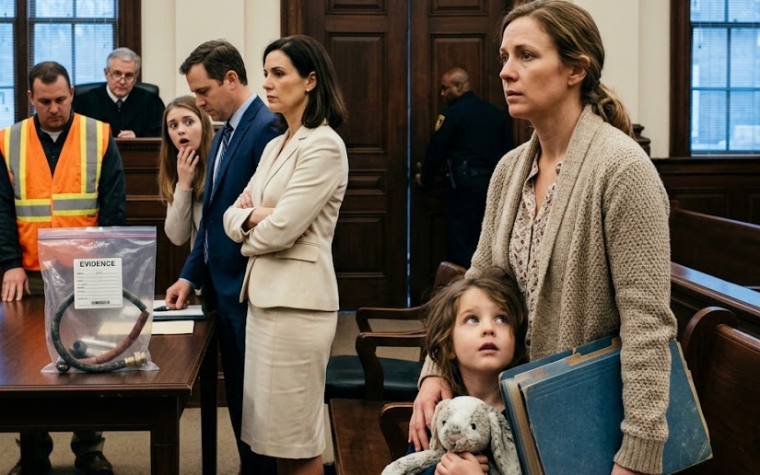
Walter’s photographs helped establish that the refrigerator appeared to have been locked before he began working that morning.
The condition of the backyard supported the fact that the appliance had not been newly placed there by him.
But a photograph could establish a scene without identifying the hand that created it.
Walter disliked that uncertainty.
He wanted a person to point to.
He wanted an explanation that could be rejected because no explanation would have been good enough.
Instead, he had evidence of an act and no satisfying knowledge of the exact moment it had been committed.
That frustrated him until he realized he was allowing the unknown person to occupy too much space in a story that had another center.