Others were marked as undeliverable and returned.
The earliest letter had been written when Anna was eight.
My mother described watching children leave school together and wondering whether Anna liked books, whether she still twisted her hair when nervous, and whether she remembered the lullaby she had sung during their only months together.
Another letter had been written after I was born.
Today your brother held my finger.
I thought of you.
I want my children in the same room before I die.
I could not continue reading.
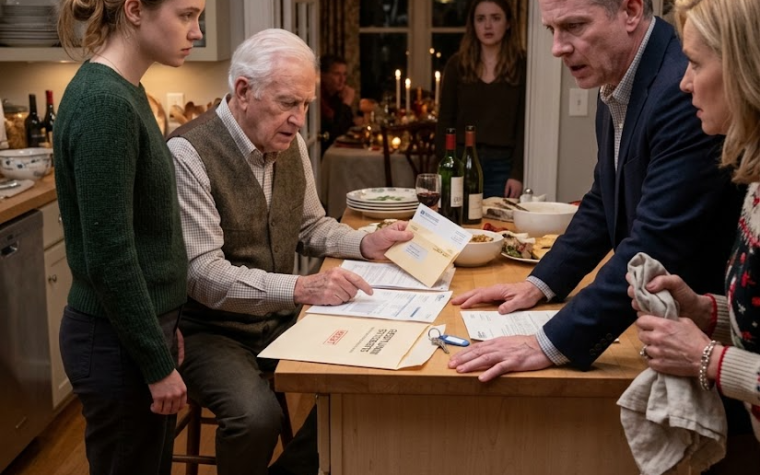
My father reached for the letters.
I pulled them away.
“You told me Mom had no other children.”
“She did not raise Anna.”
“That was not my question.”
His eyes hardened.
“Your mother was fragile.
I protected her from a mistake she could not undo.”
Anna turned her face toward the window.
My mother had been dead for eleven years.
All my life, my father had portrayed her sadness as a weakness without a cause.
He had said she was overly sensitive, easily overwhelmed, incapable of enjoying the life he provided.
Now I understood the locked drawer in her bedroom.
The birthdays when she disappeared into the garden alone.
The way she sometimes looked at me as if loving me also hurt.
She had not been mourning a vague unhappiness.
She had been mourning a living daughter she was forbidden to see.
I continued through the folder.
Beneath the letters was a legal agreement signed by my father and Anna’s guardian.
The monthly payments were not support.
They were consideration for permanent confidentiality.
Anna’s aunt had accepted because she feared losing the child entirely.
The agreement included a sentence that made my stomach turn.
Anna Whitmore shall make no claim, public or private, to the Harrison name, estate, company, or descendants.
“You wrote this about your own daughter,” I said.
My father’s composure cracked for the first time.
“I was building something that supports thousands of employees.
One scandal could have destroyed it before it began.”
“So you destroyed her instead.”
“I gave her a safe home.”
“You gave her a price.”
A small sound came from the hallway.
Sophie was laughing with the nurse.
My father lowered his voice.
“You met the child for ten minutes.
Do not confuse emotion with responsibility.”
Anna looked at me quickly, ashamed by his implication.
“I did not call Michael for money,” she said.
“Then why now?” he demanded.
Anna drew a careful breath through the oxygen tube.
“Because I am dying, and Sophie has no one.”
The room became very quiet.
Anna explained that Sophie’s father had left before she was born.
Anna had worked in a bakery until her illness made standing impossible.
Medical bills had consumed her savings.
A hospital social worker was helping arrange temporary foster care, but Anna had not signed the final papers.
She had seen my name on the shoe-store receipt Sophie brought to the hospital.
At first she believed it was a coincidence.