The flight attendant was escorted from the jet without looking at me.
Alexander’s lawyers collected statements, secured the evidence, and confirmed that the transfer had been stopped before any money left his control.
The receiving accounts led investigators to the broker who had recruited her.
Within weeks, the remaining members of the scheme were arrested.
My name never appeared in a criminal accusation.
Alexander made certain the official record identified me as the witness who exposed the theft.
He also arranged a flight back to Boston as soon as the authorities finished interviewing me.
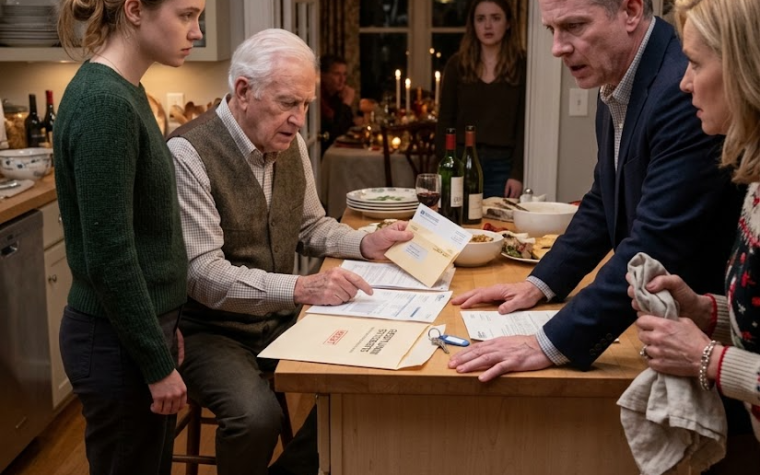
Before I left Paris, he handed me a plain folder.
I hesitated before opening it.
Inside was not a check.
It was a request for a business proposal.
Blackwood International wanted to evaluate an overnight childcare center serving hospital workers, emergency personnel, and parents with irregular schedules.
At the bottom of the page, Alexander had written one sentence by hand.
You already understand the problem.
Show me how you would solve it.
I looked up at him.
“You remembered.”
“You told me it was your dream.”
“People say things on airplanes.”
“I listen.”
Three weeks later, I walked into Blackwood International’s Boston office wearing the only suit I owned and carrying a proposal I had rewritten eleven times.
Alexander sat at the far end of a conference table surrounded by attorneys, finance directors, and childcare specialists.
He did not rescue me when they challenged my numbers.
He did not soften their questions.
He made me defend every room, every staffing ratio, every overnight fee, and every safety procedure.
For two hours, I fought for the idea.
When I finished, Alexander closed the proposal.
“I don’t invest in pity,” he said.
My heart sank.
Then he continued.
“I invest in plans that survive difficult questions.
This one did.”
The company funded the center as a business, not a gift.
I kept ownership, drew a salary, and spent the next year turning my exhausted airport confession into something real.
We opened near Boston’s hospital district with twenty-four-hour care, quiet sleeping rooms, emergency overnight placements, and fees adjusted for parents working essential jobs.
On the first night, a nurse arrived after a double shift with tears in her eyes because her regular sitter had canceled.
We took her son inside, gave him warm food, and showed him the room where he could sleep.
The nurse gripped my hand.
“You have no idea what this means.”
But I did.
I knew exactly what exhaustion could cost.
Alexander and I did not fall in love somewhere above the Atlantic.
We did something slower.
We learned to trust each other.
He visited the center without cameras or announcements.
I challenged him when his executives treated people like numbers.
He reminded me to stop apologizing whenever I entered a room filled with wealthier people.
Months became a year.
Friendship became something neither of us rushed to name.
On the anniversary of the flight, I found him sitting in the chair behind my office desk, reading the center’s latest report.
I leaned against the doorway.
“You’re in my seat.”
He looked up and smiled.
Those had been the first words he ever said to me.
They had terrified me at thirty thousand feet.
Now they reminded me how completely one wrong turn had changed both our lives.