“Emma knew not to tell us about the cookies.
She learned that from watching me.”
That was the part she carried longest.
Not that she had caused what happened, but that silence had become normal enough in our family for Gertrude to exploit it.
We changed that immediately.
Emma learned a new rule: adults do not get to ask children to keep secrets about food, medicine, touching, injuries, or anything that makes them feel strange or sleepy.
Surprises had endings.
Secrets that made her uncomfortable belonged to Mom and Dad too.
We didn’t turn her grandmother into a monster in Emma’s mind.
We told her the truth in language she could carry.
Grandma had put medicine in food without permission.
That was dangerous.
Adults could love someone and still make choices that meant they were not safe to be around.
Emma cried.
Then she asked the question Melinda had feared most.
“Does Grandma still love me?”
Melinda held her for a long time before answering.
“I think Grandma loves you.
But love doesn’t make every choice okay.”
The investigation continued for months.
The hospital records, Emma’s test results, the cookie analysis, our statements, and Gertrude’s own changing explanations became part of the case.
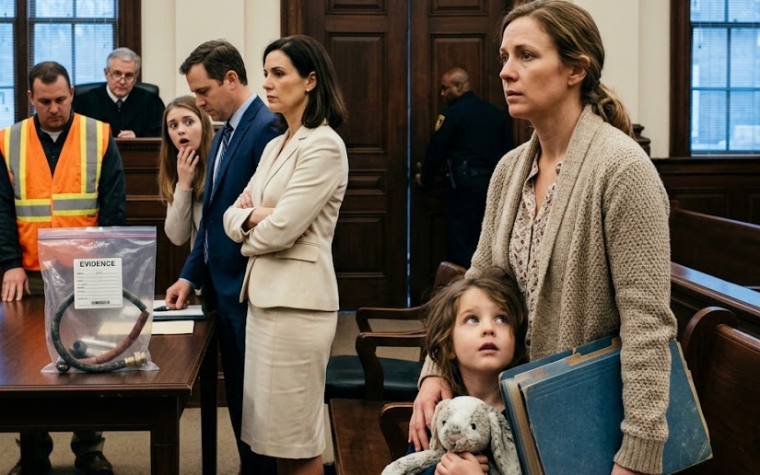
The authorities pursued child-endangerment and medication-related allegations, and a court order prevented Gertrude from having contact with Emma while the matter proceeded.
For once, money could not turn “no” into “maybe.”
Gertrude tried other routes.
She sent messages through relatives.
She described the situation as a misunderstanding.
She suggested I had manipulated Melinda against her.
She reminded people how much she had paid for family vacations, emergencies, gifts, and opportunities.
One relative called Melinda and said, “Your mother made a terrible judgment, but she’s still your mother.”
Melinda listened quietly.
Then she asked, “If Grant had secretly put medication into Emma’s food, would you be telling me to forgive him before the investigation was finished?”
The relative had no answer.
Neither did anyone else after that.
Gertrude’s greatest miscalculation was assuming Melinda would eventually fold.
That had always happened before.
Gertrude would push.
Melinda would resist.
Gertrude would invoke sacrifice, family, money, or guilt.
Melinda would surrender something just to make the pressure stop.
But this time, surrender would have meant teaching Emma that her safety mattered less than an adult’s feelings.
Melinda refused.
Months later, when the legal process finally produced consequences, Gertrude was required to accept responsibility for secretly administering medication to Emma and was barred from unsupervised contact.
Additional conditions kept her away from our home and school.
The exact legal language mattered less to me than the practical result.
She could no longer simply arrive at 6:30 with a smile, a jar, and the assumption that our door belonged to her.
Brightwood Academy disappeared from our conversations.
So did private tutors selected by Gertrude, carefully curated activities, and arguments about whether Emma’s ordinary childhood was ambitious enough.
Emma stayed at her neighborhood school.
She still drew crooked stars.
She still spilled juice.
She still sometimes came home with spelling tests that were less than perfect.
And nobody treated those things like evidence of failure.
One Saturday several months after the hospital visit, Emma asked if we could bake cinnamon cookies.
Melinda froze.
I saw it happen from across the kitchen.
For both of us, cinnamon had become tied to ceramic shards, fluorescent hospital lights, and a doctor’s report opening in trembling hands.