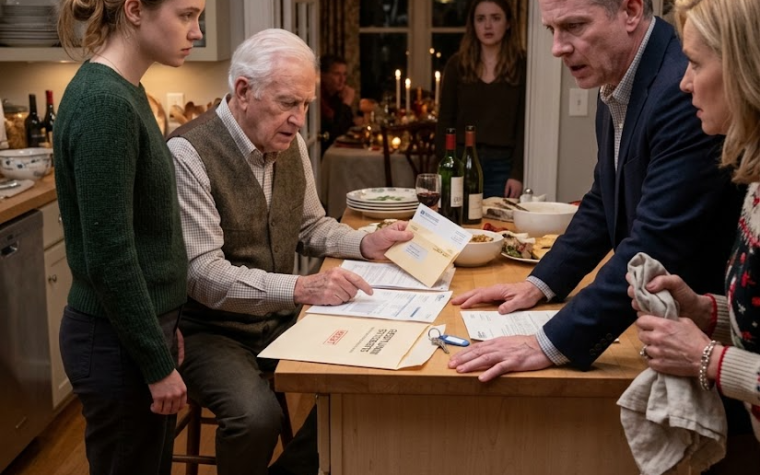
My mother followed Sloan, but not before turning toward me.
“You destroyed your sister’s life.”
I held her gaze.
“No.
I answered one question.”
Margaret remained seated beside me after most of the room had cleared.
“Why did you stay silent for so long?” she asked.
I considered giving the respectable answer.
Loyalty.
Family.
Compassion.
The truth was less noble.
“I thought being strong meant absorbing the damage without passing it back.”
Margaret nodded.
“Strength is useful.
Boundaries are useful too.”
Helen handed me Grandma’s ledger.
Inside the back cover, Grandma had written one final note addressed to me.
Emma, people will call you difficult when your silence is no longer convenient for them.
Let them.
I read it twice.
The orange dress scratched my skin.
One safety pin had bent near my ribs, but it was still holding.
Marissa approached carrying the lavender gown.
“We can help you change,” she said.
I touched the silk through the garment bag.
For a moment, I imagined putting it on and returning to the ballroom in the dress I should have worn from the beginning.
Then I shook my head.
“No.
Let the photographs show what they did.”
I left the estate in neon orange.
Not because the dress no longer humiliated me, but because the humiliation belonged to the people who had chosen it.
In the weeks that followed, Daniel confirmed that the marriage license had not been filed.
He and Sloan separated.
His family’s attorneys referred the falsified financial disclosures for review, though I stayed outside that process unless asked to provide records.
Sloan sent me twelve messages in three days.
The first blamed Margaret.
The next blamed Daniel.
Then Mom.
Then the pressure of the wedding.
By the final message, she blamed me for being too successful and making honesty impossible for her.
I did not respond.
My mother left voicemails demanding that I repair the family.
I saved them but did not return the calls.
My father came to my office alone.
He brought a box containing Grandma’s photographs, letters, and military postcards I had sent home during deployment.
Mom had kept them in storage because, he admitted, they did not fit the story she preferred to tell about me.
He asked whether we could start again.
I told him starting again would require telling the truth even when nobody powerful was in the room.
He said he understood.
Time would determine whether he did.
Margaret later invited me to review a bridge-restoration proposal involving one of the Whitlock family foundations.
I accepted the meeting only after making it clear that I would not receive work as compensation for what happened at the wedding.
She appeared almost offended.
“I do not reward humiliation,” she said.
“I hire engineers.”