She had mentioned the strange coffee order to a kitchen manager, who warned her that wealthy employers did not like servants questioning guests.
She had once waited outside my office with a photograph of Marcus near the old study.
I had walked past her while speaking on the phone.
She had said my name.
I had lifted one finger without looking at her and closed the door.
After that, she stopped trying to be heard and started gathering proof.
“Why keep saving me?” I asked.
Emily studied my face for a long moment.
“The first time, I thought the kitchen staff would be blamed if the coffee hurt you.
The second time, that fake maintenance crew had weapons, and there were children visiting one of the housekeepers in the back rooms.”
“And after that?”
“After that, I knew Marcus would keep trying.”
“That does not answer the question.”
Her voice remained weak, but it did not shake.
“Nobody deserves to be murdered by someone who smiles at them every morning.”
I looked down at my hands.
“I paid you eleven dollars an hour.”
“Yes.”
“You took two buses.”
“Yes.”
“You protected me while I treated you like furniture.”
Emily did not comfort me.
That was another gift I had not earned.
“I’m sorry,” I said.
She watched me carefully, perhaps waiting for the apology to become an excuse.
It did not.
When she was strong enough to discuss her future, I asked what she wanted.
She did not ask for a mansion, a title, or a place beside me.
She wanted her medical care covered.
She wanted compensation for the wages she had been denied and the danger she had endured.
She wanted independent legal counsel, protection from anyone still connected to Marcus, and a written guarantee that no payment would require her silence.
Most of all, she wanted to leave my house without being followed, owned, or treated as though saving my life had made her part of my world.
I agreed to every term.
The settlement was prepared by her attorney, not mine.
It included years of back pay at a fair rate, medical costs, secure housing, and enough money for her to choose what came next.
No confidentiality clause was included.
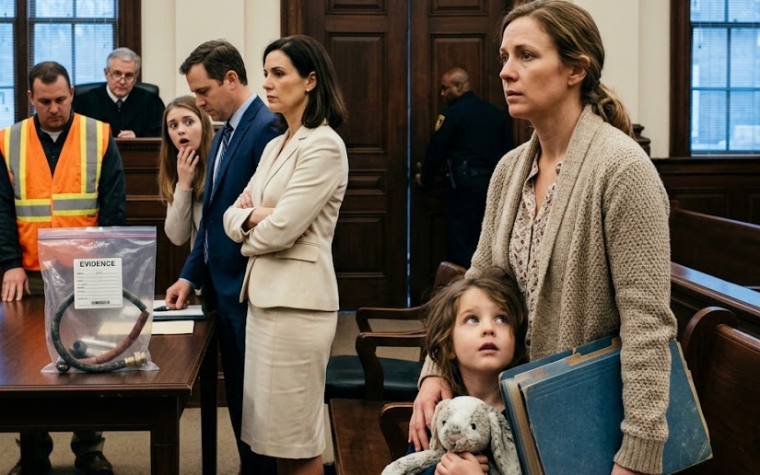
Emily later testified about the recordings and the green box.
She entered the courtroom through the front doors, wearing a navy coat and carrying no laundry, no coffee, and no one else’s belongings.
Marcus looked at her only once.
Then he lowered his eyes.
Months after the shooting, Emily returned to the estate to collect a small ceramic bird that had belonged to her mother.
She had kept it on a shelf in the staff room.
The mansion’s routines had changed by then.
Wages were higher.
Staff could report security concerns directly to an outside review office.
No guard could remove an employee for speaking without creating a recorded incident report.
My brother’s study had been emptied, documented, and sealed.
None of those changes repaid Emily.
They only proved I had finally understood the cost of ignoring people.
I walked her to the front door.
The repaired driveway lights reflected across the polished floor where she had once stood trembling between me and the SUV.
Emily paused in the foyer.
“You told me to move that night,” she said.
“I remember.”
“You looked angry.”
“I was angry.”