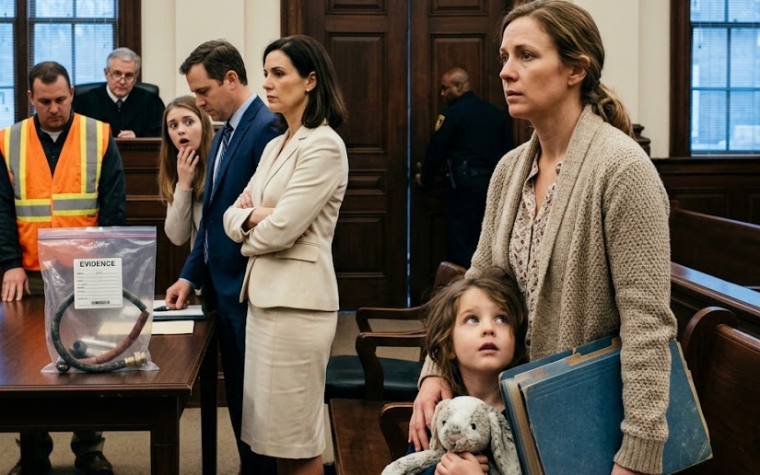
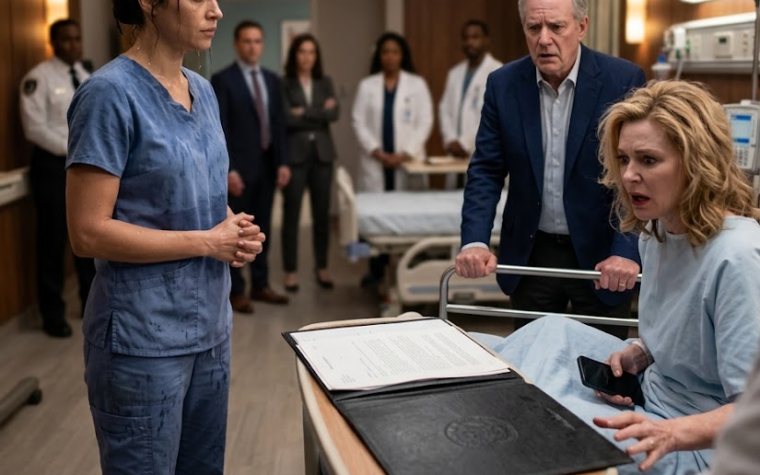
I repeated the sentence exactly.
“Your defective genes killed our son.”
Daniel shifted in his chair.
The prosecutor placed the recovered drafts of the false genetic report on a screen.
She highlighted the language Daniel had changed from paternal inheritance to maternal inheritance.
“Had you ever seen this report before the investigation?” she asked.
“No.”
“Did any doctor tell you that your genes caused Liam’s death?”
“No.
Daniel did.”
His lawyer approached me carefully during cross-examination.
“You were exhausted that night, correct?”
“Yes.”
“You had been awake for many hours?”
“Yes.”
“You were emotionally overwhelmed?”
“My son was dying.”
“So your memory may not be perfect.”
“My memory of his exact shirt may not be perfect.
My memory of him blaming me is.”
The lawyer asked whether I hated Daniel.
I looked toward the jury.
“For years, I hated myself.
That was the point.”
The courtroom went silent.
Daniel’s composure began to fracture during the final days of testimony.
He passed angry notes to his lawyer.
He shook his head when witnesses spoke.
Once, when the prosecutor described Liam as defenseless, Daniel muttered loudly enough for the nearest juror to hear.
“He was going to die anyway.”
His lawyer grabbed his arm.
The judge ordered the jury out.
Daniel tried to explain that he was speaking hypothetically, but the words had already escaped.
They did not prove the case by themselves.
They did something almost as important.
They showed the contempt hidden beneath his performance of grief.
The jury deliberated for less than a day.
I sat between Dr.
Ellis and the detective when they returned.
My hands were clasped so tightly that my fingernails left marks in my palms.
Daniel stood.
The clerk read the verdict.
Guilty of murder.
Guilty of evidence tampering.
Guilty of falsifying medical information and obstructing the investigation.
Daniel closed his eyes.
For the first time since Liam’s death, he looked frightened.
I did not feel victorious.
There was no version of justice that returned my baby to the incubator and allowed me to carry him home.
There was no verdict that gave me back six years without panic, shame, or the sound of Daniel’s voice inside my head.
But the verdict returned one thing.
The truth.
At sentencing, Daniel claimed he had loved Liam and panicked under the pressure of his illness.
The judge rejected that explanation.
“Panic is an instant,” she told him.
“You prepared a false diagnosis weeks in advance.