“I know.”
“I was grieving.”
“I know.”
“Then why are you saying it like I did something horrible?”
“Because needing help didn’t mean you needed everything I had.”
Mom immediately stepped between us.
“Enough.
She lost her mother.”
The sentence had been used so many times that it sounded rehearsed.
I nodded.
“And I was sorry for her.
That’s why I agreed to move out of my room.
I thought it was temporary.”
“We all had to adjust.”
I pointed toward the sunporch.
“Who adjusted like that?”
Mom stared at me.
“Who else lost their bedroom? Who else had their laundry dropped from the routine? Who else got left home while the rest of you went out together?”
Leo crossed his arms.
“Maybe if you weren’t always so difficult—”
“The apple?”
His jaw tightened.
I turned toward him fully.
“You told them I start fights over things as small as an apple.
Tell the whole story.”
He looked confused for a second.
Then he realized I had read the group.
Mom’s face changed.
“You went through Marla’s messages?”
There it was again.
The escape route.
If they could make the discovery the problem, they wouldn’t have to talk about what I discovered.
“She left the account open on my laptop.
A notification appeared.”
Marla whispered, “You still shouldn’t have read it.”
I nodded once.
“Maybe I shouldn’t have.
And you still wrote it.”
Nobody had an answer for that either.
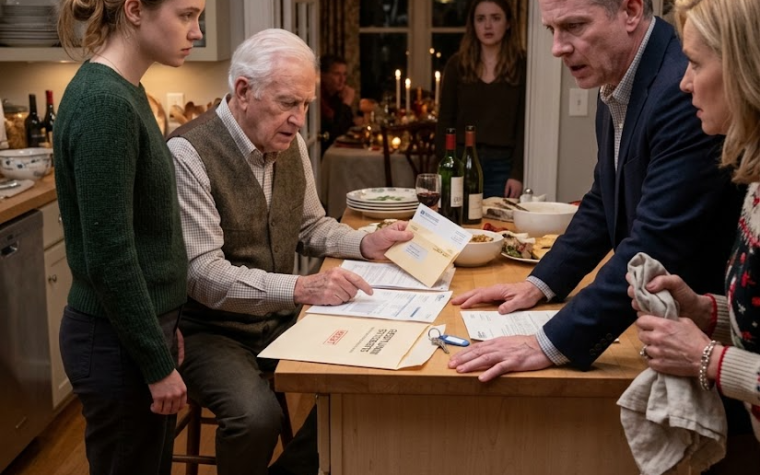
Dad sat down in the nearest chair.
He looked tired now, which would once have made me soften immediately.
“Xena,” he said, “families make mistakes.”
“Yes.”
“And people say things when they’re annoyed.”
“Yes.”
“So don’t make a permanent decision because of one bad night.”
I stared at him.
“That’s the problem.
You think this was one night.”
His eyes dropped.
I didn’t need to list everything again.
The cot was visible behind me.
So was Marla’s room.
The evidence had furniture.
Mom suddenly picked up her phone.
“I sent you money.