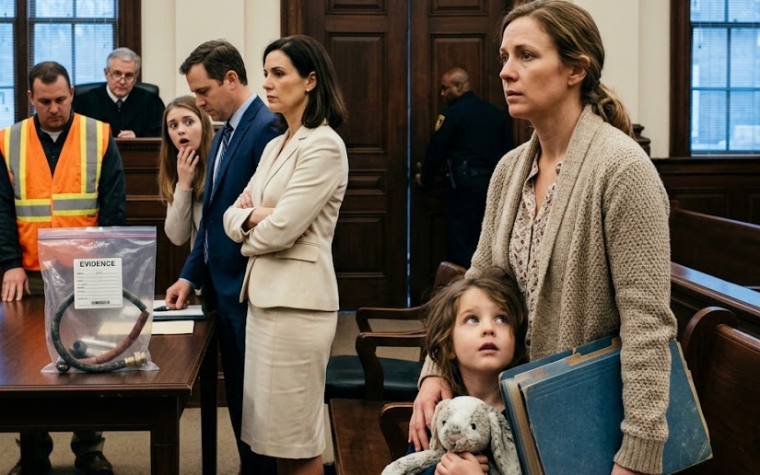
I simply wasn’t going to reward a lie because refusing it might make someone angry.
Dad finally spoke.
“I think we owe Thora an apology.”
Mom looked at him as if he had changed sides in a war.
He met her eyes.
“We do.”
Then he looked at me.
“I knew about Thanksgiving.”
“I assumed you did.”
“I should have called you.”
“Yes.”
He swallowed.
“I didn’t because your mother said you would understand.”
There were those words again.
Reasonable.
Understanding.
The polite vocabulary people used when they wanted the quiet person to absorb the cost.
“I did understand,” I told him.
“I understood exactly what all of you were asking me to accept.”
He nodded slowly.
“And?”
“And I don’t accept it anymore.”
No one had an answer for that.
Three days later, Dad brought Grandma Eleanor’s silver tea service to my apartment.
Mom did not come with him.
The pieces were wrapped in towels inside a cardboard box.
I unwrapped the teapot last.
There was a tiny dent near the handle that I remembered from childhood.
Grandma used to complain about it every Christmas and then refuse to have it repaired because, according to her, “A thing that survives a family ought to be allowed a scar.”
Dad watched me run my thumb over the dent.
“I’m sorry,” he said.
This time, I believed he understood at least part of what he was apologizing for.
Vivien resubmitted the wedding request several weeks later.
The new version was smaller, accurate, and stripped of Derek’s name and the promises about business connections.
I reviewed it with Margaret and approved only the portion that fit Grandma’s terms.
No revenge.
No speech.
No victory lap.
Derek and Vivien postponed their wedding.
Whether they repaired their relationship was theirs to decide.
Derek sent me one brief message through Margaret thanking me for answering his questions truthfully and apologizing for having accepted Vivien’s description of me without ever meeting me.
I didn’t need anything more from him.
My mother took longer.
For months, every conversation with her seemed to approach an apology and then veer away from it.
Eventually she called one Sunday evening.
“I thought I was protecting Vivien,” she said.
“From what?”
Silence.
Then, quietly, “I don’t know anymore.”
It was not a perfect apology.
But it was the first sentence I had heard from her in years that wasn’t polished for appearance.
I told her that if she wanted a relationship with me, there would be rules now.
No more jokes about my salary.
No more asking me to fund celebrations while treating me like an embarrassment.
No more assuming I would understand every cruelty simply because I had survived the previous ones quietly.
She didn’t like hearing it.