They confirmed that Ryan had entered with his own key and that no one was reporting physical violence.
Ryan explained that he wanted his parents to leave for the day while he obtained legal advice about ending their permission to live there.
The officers did not conduct an eviction.
They made that clear.
Occupancy rights had to be handled through the proper legal process.
But Ron and Deborah could not block Ryan, Sarah, or Grace from their own living areas, take Grace’s key, or remove her belongings again.
That was enough for the morning.
Ron packed an overnight bag while muttering about betrayal.
Deborah moved through the kitchen collecting medication and chargers, crying whenever anyone looked at her.
Heather took Avery’s duffel bag back to her car.
Before they left, Ron faced Ryan in the foyer.
“You will regret humiliating your mother.”
Ryan’s voice remained level.
“You humiliated Grace.”
“She is a teenager.
She will get over it.”
“No,” Ryan said.
“She will remember who protected her.”
Ron stared at him for a long moment.
Then he walked out.
That afternoon, Ryan spoke with a real-estate attorney.
The answer was less cinematic than Ron feared and more serious than Deborah expected.
The deed was valid.
Ryan was the sole legal owner.
His parents’ long occupancy meant he could not simply throw their possessions onto the lawn, and he had no intention of doing so.
He could, however, formally terminate their permission to remain and require them to leave through the notice process required by local law.
The attorney prepared the notice.
Ryan signed it at Joan’s kitchen table—the same place Grace had sat wrapped in a quilt hours earlier.
His hand shook once before the pen touched the paper.
I placed my palm over his wrist.
“You do not have to feel good about it,” I said.
“I don’t.”
“You only have to know why you’re doing it.”
He looked across the street at Grace’s window.
“I do.”
The notice was delivered properly.
Ron responded with three pages accusing Ryan of abandoning his parents.
Deborah sent messages to relatives claiming we had made them homeless without warning.
Ryan answered none of them directly.
He provided the deed, the notice, and a brief factual timeline to anyone whose involvement actually mattered.
Some relatives defended Ron at first.
Then they learned about the grocery bag.
They learned Grace had called four times from the curb after midnight.
They learned Deborah had refused to contact us because Heather wanted the bedroom to appear available during a custody evaluation.
The family’s sympathy became quieter.
Ron tried another argument.
He claimed years of repairs gave him ownership rights.
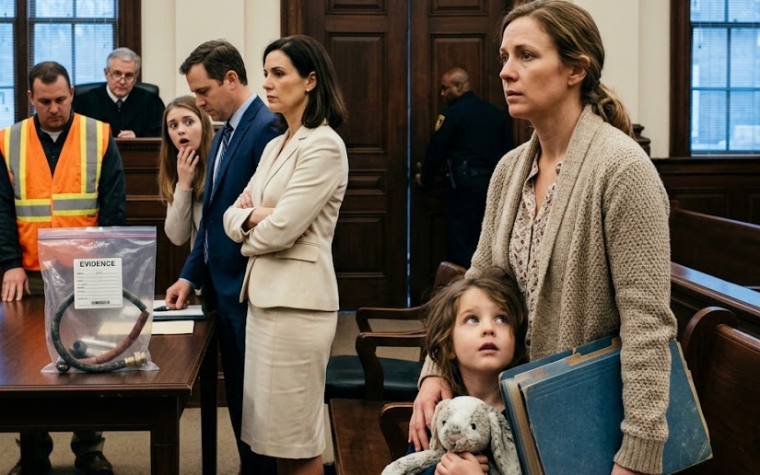
The receipts in the blue folder told a different story.
Ryan had paid for the roof, taxes, insurance, and major repairs.
Ron’s contributions had been ordinary household expenses made while living there without rent.
The blue folder did not shout.
It did not insult anyone.
It simply survived every version of the story Ron tried to tell.
During the notice period, Ron and Deborah returned to collect their belongings under agreed conditions.
They were not permitted to be alone with Grace.
Deborah attempted an apology on the second visit.