The footsteps outside Ibe’s house stopped just beyond the door.
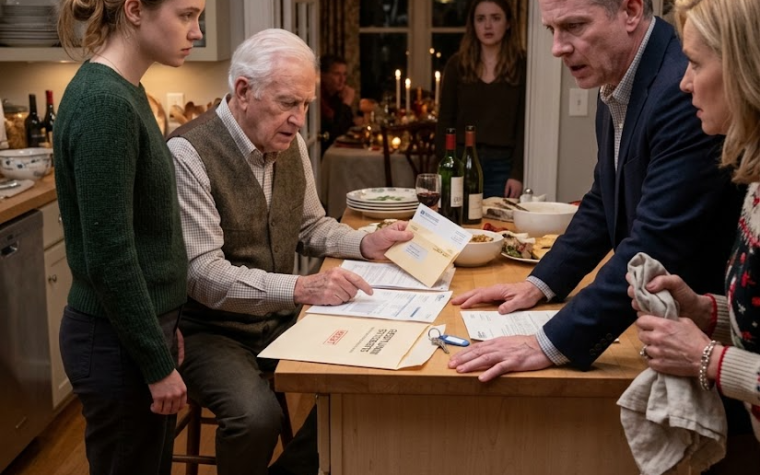
Inside, Ibe sat quietly with the folder open on his table.
He had spent the hours after the failed celebration replaying every detail in his mind: DPO Charles insisting that he eat, the sudden anger when he refused, the officers who would not touch the cake, and the speed with which Charles removed everything once Ibe asked him to taste it first.
Ibe could not prove exactly what had been inside the cake or wine.
Charles had carried them away.
But Ibe no longer believed the celebration had been innocent.
His dream had made him cautious.
Their reaction had made him afraid.
And fear, he decided, would not make him careless.
The folder contained the notes he had written immediately after leaving the station gathering.
He had recorded the time, the names of the officers present, the words he remembered Charles saying, and the fact that nobody agreed to taste the food after repeatedly insisting that it was safe.
He had also written one sentence across the last page: If anything happens to me tonight, begin with the celebration.
Ibe did not know that behind the closed door of Charles’ office, the DPO had already moved from poison to a second plan.
Charles had been humiliated.
He had expected Ibe to smile, thank everyone, eat the cake and drink the wine.
Instead, the junior officer had forced him into an impossible choice in front of witnesses.
Eat the poisoned food himself or refuse and raise suspicion.
Charles had escaped by pretending to be offended.
But once the office door closed, his fear turned into rage.
“Ibe knows,” he told the officers who had helped him arrange the celebration.
“Whether somebody warned him or that dream of his saved him, the poison is useless now.”
One officer suggested hiring outsiders.
Another officer believed using strangers created unnecessary risk.
“Send me and two men,” he said.
“We know his house.
We go there tonight, finish it, and make it look like armed robbery.”
Charles stared at him for several seconds.
Then he agreed.
“He refused to die by poison,” Charles said.
“There are many ways to kill a rat.
I don’t want him to see tomorrow.”
What Charles did not know was that Ibe had spent years surviving difficult situations by observing what people did when they believed nobody important was watching.
He was a junior officer.
Men like Charles mistook that for helplessness.
Ibe understood rank.
He respected authority.
But respect had never required him to ignore danger.
After the celebration collapsed, Ibe had not confronted anybody else.
He had not shouted through the station that his colleagues were trying to murder him.
He had not given Charles another reason to accuse him of insubordination.
He simply went somewhere private and wrote down what happened.
Then he contacted a trusted senior authority outside Charles’ immediate control.
Ibe did not make dramatic claims.
He described the celebration exactly as it happened.
He explained the dream that made him refuse the food, but he did not offer the dream as evidence.
The evidence, he said, was behavior.
A room full of officers had encouraged him to eat and drink.
Yet when he asked one person to taste the same food, everyone refused.
Charles became angry, collected the food and ended the gathering.
“I may be wrong,” Ibe said.
“But if I am right, removing the food will not remove the danger.”
The officer listening to him did not laugh.
He told Ibe to write down everything and avoid confronting Charles.
That was why the folder was now open on the table.
And that was why Ibe was not alone in the way Charles expected him to be.
Outside the house, the approaching men believed they were walking into the second half of an easy plan.