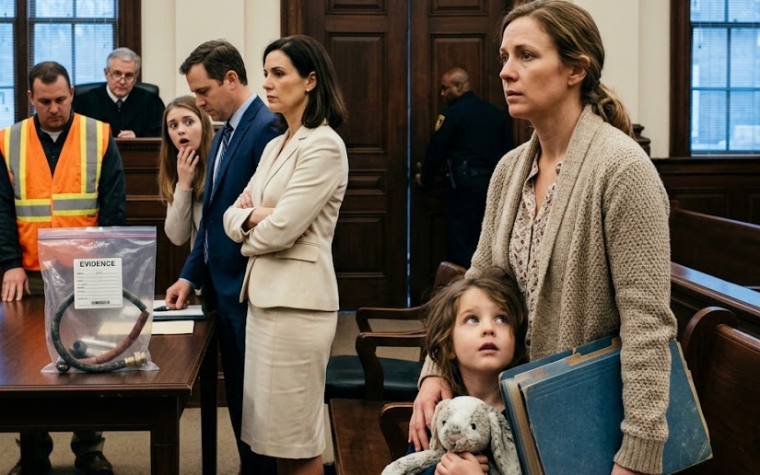
Consequences followed through the legal process, not in one dramatic instant.
There were restrictions, hearings, and conditions that made it harder for my parents to reach us or force contact while everything was reviewed.
It wasn’t a perfect ending.
It was better than that.
It was real.
My daughter started sleeping through the night again.
At first she asked whether she needed permission to open the refrigerator.
The question crushed me.
“You live here,” I told her.
“You can get water whenever you need it.”
A week later she left crayons on the living-room floor.
My first instinct was to panic because clutter had once been enough to start an argument.
Then I realized nobody was coming through the doorway to shout.
So I sat beside her and helped her color.
The apartment slowly stopped feeling like a hiding place.
It became ours.
My separate bank account became the account that paid our bills.
The friend who had quietly helped arrange the apartment came over with groceries and refused to let me apologize for needing help.
My lawyer kept the evidence secure.
And the necklace that had once felt like a secret weapon eventually went into a drawer.
I didn’t need to wear it every morning anymore.
Months later, my daughter asked me why I hadn’t left sooner.
There was no accusation in her voice.
Just curiosity.
I thought about giving her a simple answer.
Instead I told her the truth in words she could understand.
“I was scared,” I said.
“And I needed a safe plan.”
She considered that.
“But you made one.”
“Yes.”
She smiled.
“Good.”
I looked at her and understood something I hadn’t understood the night the police arrived.
I had thought freedom would begin when the front door opened and officers walked into my parents’ house.
It didn’t.
That was only the moment the door became visible.
Freedom came afterward in smaller choices.
Not answering a threatening message.
Keeping our address private.
Buying groceries without explaining the receipt.
Letting my daughter laugh too loudly in the living room.
Turning off my phone at night.
Saying no without preparing for punishment.
The last time I saw the necklace, I held it for a moment before placing it back in the drawer.
That tiny device had captured the night my parents believed they still controlled me.
But the recording wasn’t the thing that saved us.
The plan was.
The records were.
The people I trusted were.
And, eventually, the decision to stop asking permission to protect my daughter was.
My father had looked at me in that kitchen and said I couldn’t even protect myself.
For a long time, part of me had believed him.
Now I knew the truth.
I hadn’t been powerless.
I had been preparing.