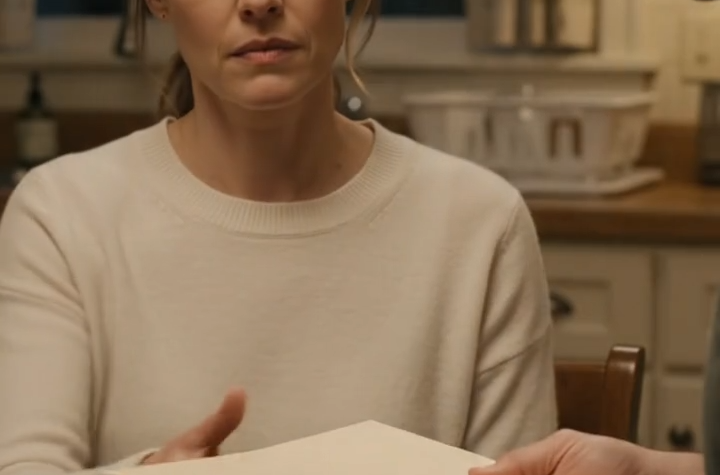
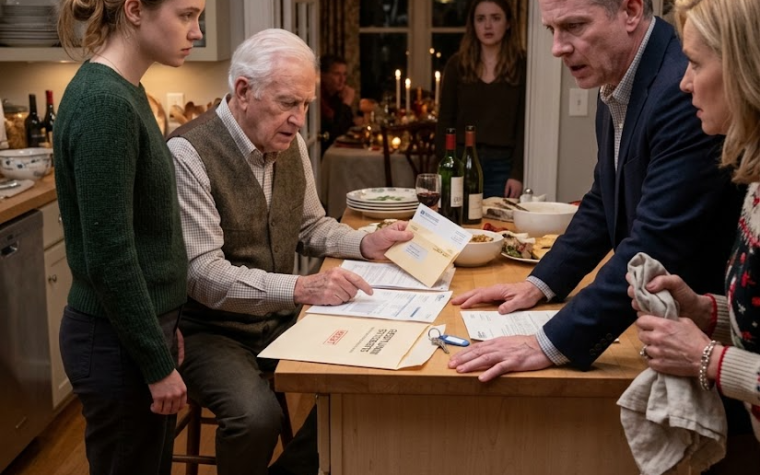
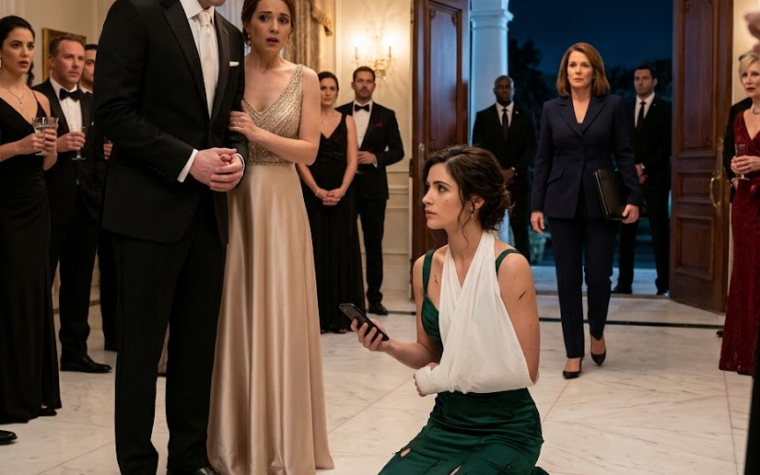
Celeste crossed the room and wrapped both arms around her daughter.
“You walked,” she whispered.
Arya shook her head against her mother’s shoulder.
“I walked.”
Celeste looked over Arya’s shoulder at Rowan.
He was staring at the floor.
She approached him afterward.
“Name your price.”
Rowan looked confused.
“For what?”
“For your time.
For everything.”
“You already paid the shop for the pedal.”
“Rowan.”
He knew that tone.
It was the voice of a woman who solved problems by moving numbers across contracts.
“I don’t want your money.”
Celeste’s eyes narrowed.
“Everyone wants something.”
Rowan glanced across the room, where Arya was arguing with her physician about whether four steps counted as four or three and a half.
“Then hire better rehab access for people who don’t have private jets.”
Celeste said nothing.
“There are people who get told what their limits are and then go home because they can’t afford another opinion,” Rowan continued.
“If you’re determined to spend money, spend it there.”
Celeste studied him for a long moment.
Six months later, her foundation funded a rehabilitation initiative pairing clinical specialists with community-based coaches and adaptive equipment programs for patients who otherwise could not afford prolonged care.
Rowan refused an executive title.
He kept repairing cars.
He did agree to consult occasionally, mostly because Arya told him that refusing every opportunity was just another form of stubbornness.
His eight-year-old son began doing homework in a cleaner corner of the workshop after school.
Celeste quietly made sure the program compensated Rowan for every hour he gave it, despite his continued suspicion of anything that arrived in an envelope with too many zeros.
Arya never became the girl she had been before the crash.
That surprised her by eventually becoming a comfort.
She still used a crutch on difficult days.
Long distances exhausted her.
Some mornings her leg felt heavy and unreliable, and certain pains never completely disappeared.
But the boundaries of her life were no longer defined by the worst prediction she had ever heard.
A year after meeting Rowan, she returned to his workshop alone in her adapted vehicle.
He was adjusting a suspension assembly when she walked in with one crutch tucked under her arm instead of beneath it.
Rowan looked at the crutch.
“Showing off?”
“Obviously.”
He nodded toward the car.
“Pedals giving you trouble again?”
“No.”
Arya reached into her bag and pulled out a new red shop rag.
She tossed it at him.
Rowan caught it.
For several seconds, neither spoke.
Then Arya looked toward the strip of concrete where he had placed the first rag a few inches from her shoe.
“You know what’s strange?”
“A lot of things.”
“My mother spent millions trying to get me farther.”
Rowan waited.
Arya smiled faintly.
“You were the first person who made the distance smaller.”