Knocking on a door had been harder when it mattered.
Harper remained in the hospital for three days.
Child welfare workers located Elias’s older sister in another county.
She arrived before noon, carrying a worn family album and crying before she reached Harper’s room.
Harper stared at her aunt, then at Sarah.
“Did you find Daddy?” she asked.
Sarah pulled a chair close to the bed.
She had delivered death notifications before.
She had spoken to parents, spouses, brothers, and friends.
Nothing had prepared her to explain death to a child who had spent four nights believing patience could keep a promise alive.
“Yes,” Sarah said.
Harper’s fingers tightened around the blanket.
“Is he mad because I called?”
“No.
He would be proud of you.”
“Then why isn’t he here?”
Sarah glanced toward Harper’s aunt.
The woman covered her mouth with one hand.
“Your daddy was coming home,” Sarah said.
“He bought everything on the list.
A car hit him before he could reach you.”
Harper did not cry immediately.
She looked at the bandage on her arm.
“He didn’t leave me?”
“No.”
“He tried?”
“With everything he had.”
Harper turned toward the window.
For nearly a minute, no one spoke.
Then she whispered, “I knew he didn’t break promises.”
The investigation into the driver continued.
Traffic officers traced the dark sedan through cameras along Route Nine.
One image showed a partial license plate.
Another showed the vehicle entering a residential garage before dawn with one headlight missing.
Detectives visited repair shops and parts suppliers.
At one store, an employee remembered a customer asking for a replacement headlight assembly without providing a vehicle identification number.
The customer had paid cash but appeared on surveillance footage.
He was twenty-four years old and lived six miles from Elmbridge Avenue.
When police searched the garage, they found the sedan beneath a cover.
Its damaged bumper had been removed.
Fragments recovered at the crash scene matched the broken mounting clips in the vehicle.
The driver first claimed he believed he had struck a trash container.
Investigators showed him data from the car’s onboard system.
It recorded sudden braking, a severe frontal impact, and the driver’s door opening twelve seconds later.
He had stopped.
He had stepped out.
He had seen Elias lying beside the road.
Then he had returned to the car and driven away without calling for help.
The driver’s story collapsed.
He admitted that he panicked because he had been speeding and had consumed alcohol earlier that night.
He believed reporting the collision would ruin his life.
His decision ensured that Elias lay in the rain until another motorist noticed debris in the road nearly twenty minutes later.
Prosecutors charged him with leaving the scene of a fatal collision and additional offenses supported by the evidence.
Months later, he pleaded guilty rather than force Harper’s family through a trial.
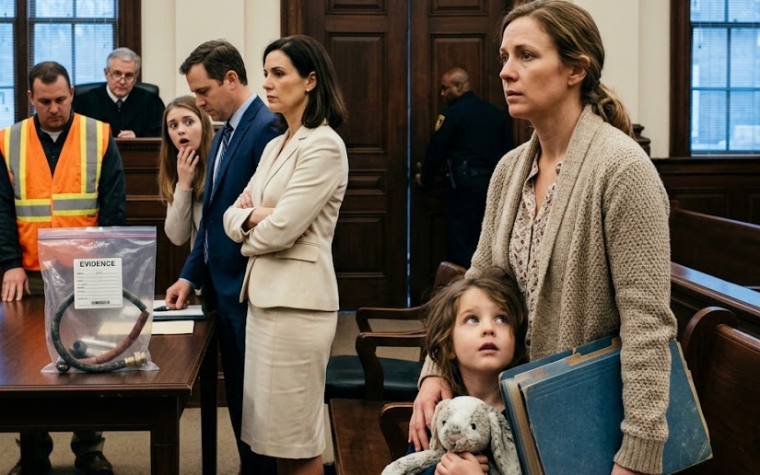
At sentencing, Elias’s sister read a statement describing the four nights Harper waited beside the door.
She did not ask the judge for revenge.